
GRAVITY GIRLS
Their incredible talent is no secret, but how did our rainy little isles produce this crop of world-beating junior women downhill racers?
Words
Meg Elliot
Images
Cam Mackenzie and supplied
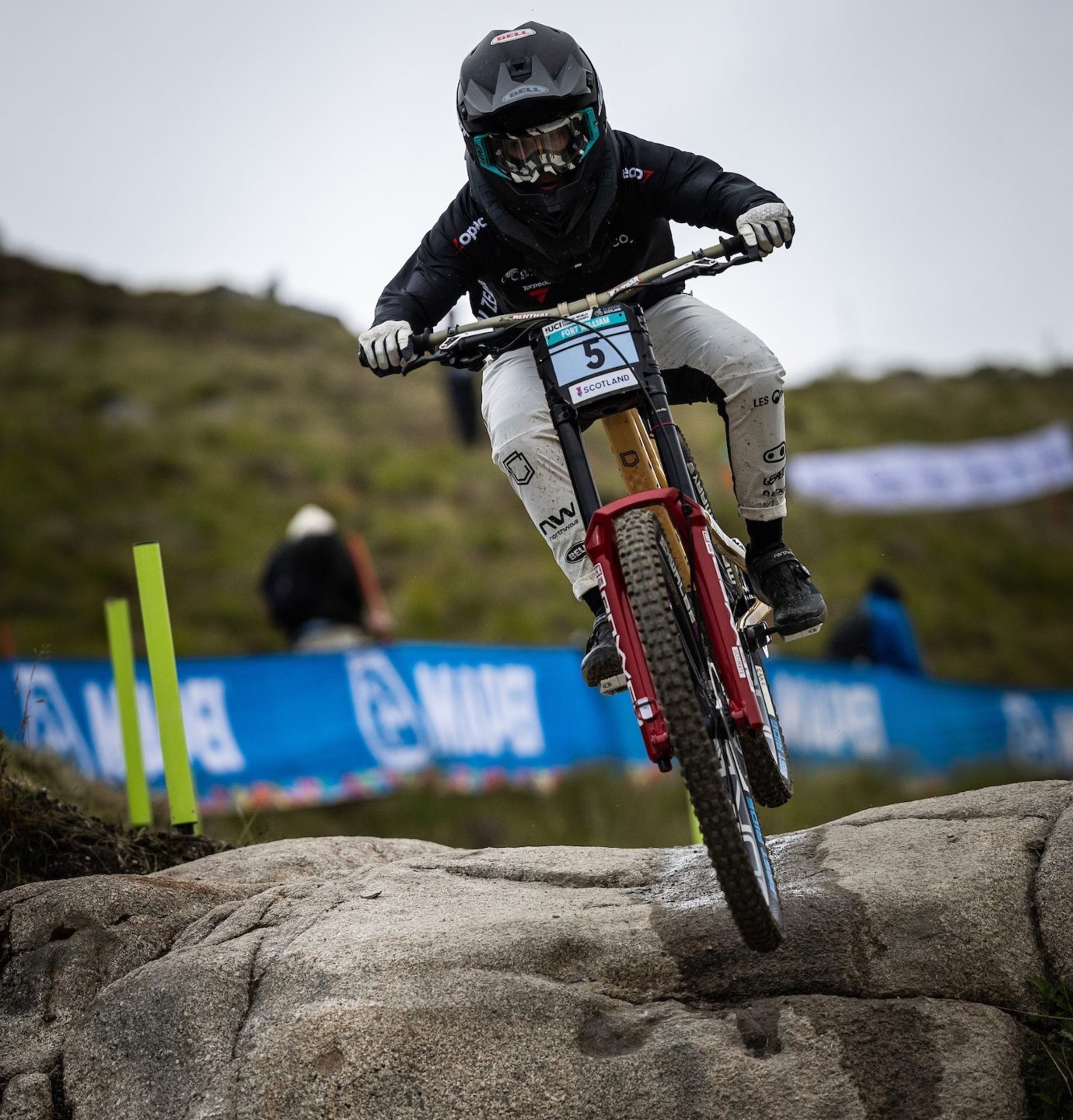
Erice van Leuven is at the top of the track, and the final rider to drop into the cloud at Aonach Mòr in Scotland’s Nevis Range. Despite a slipped pedal seconds into her run, she’s pushing harder than ever—0.8 seconds up, now five, and now she’s shooting across the finish line.
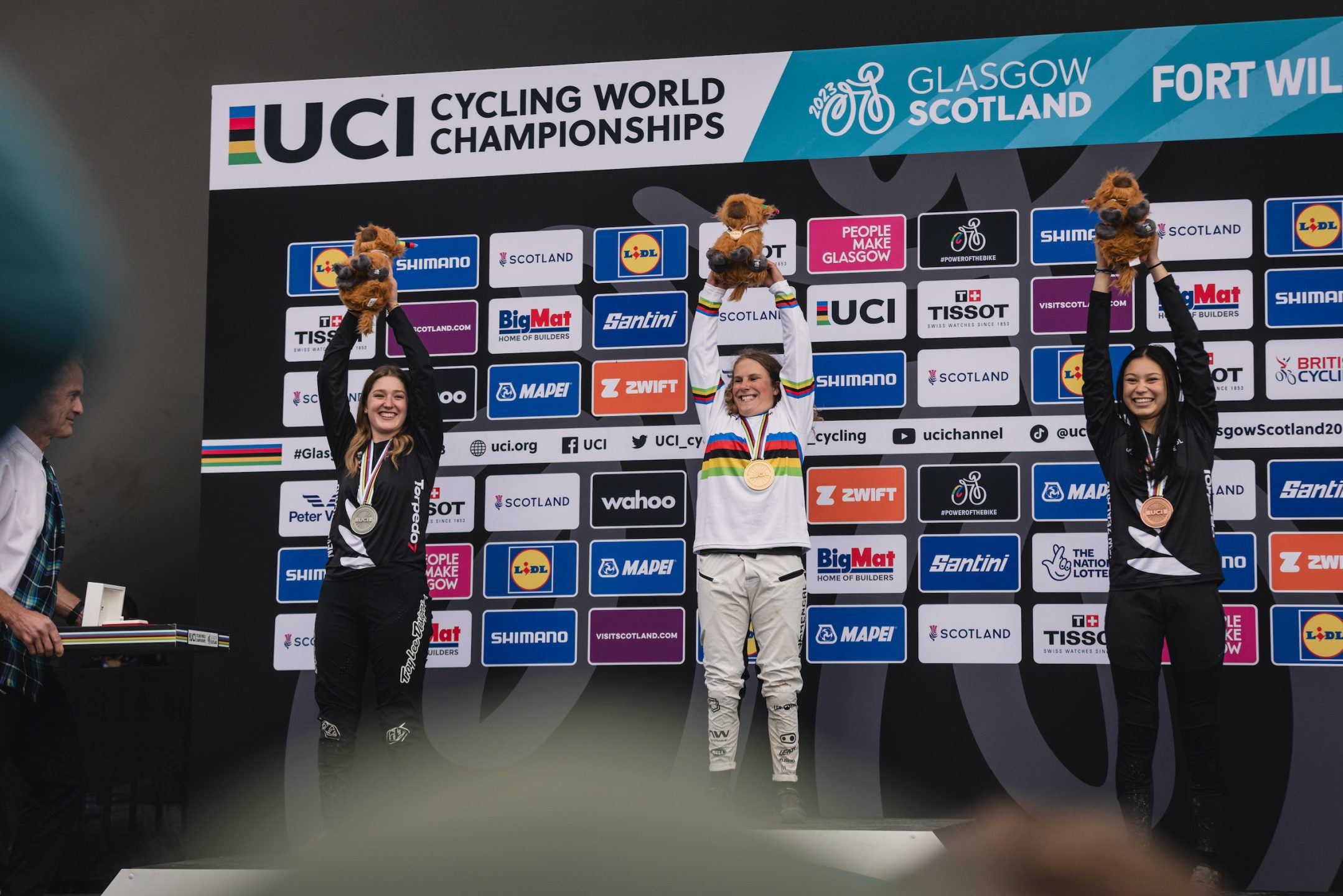
It’s first, second and third at the 2023 UCI Downhill World Championships for Erice, Poppy Lane and Sacha Earnest, all Kiwi junior women, half a world away from home.
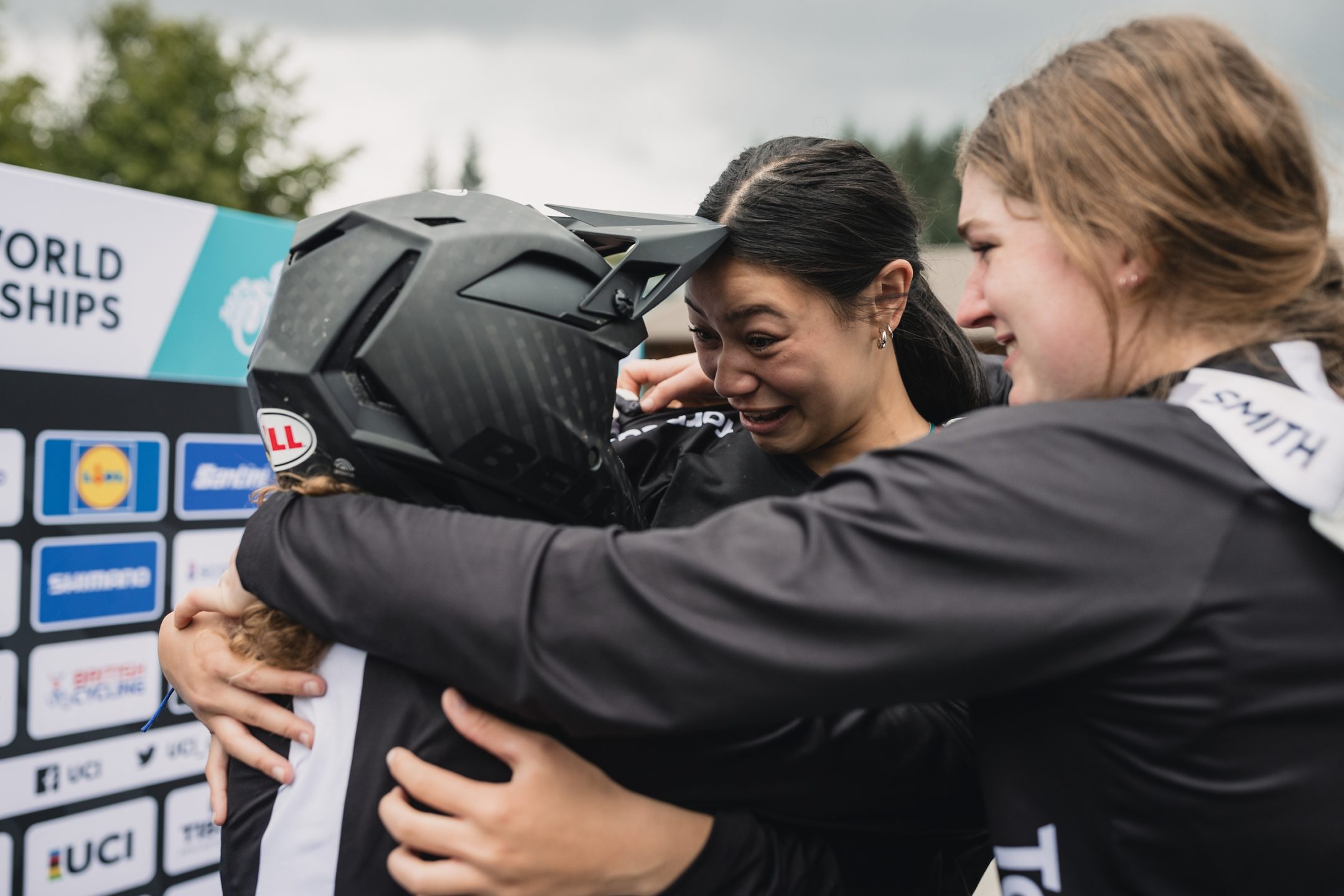
That image of the three of them, hugging each other tightly with the flag of New Zealand clutched between them, is not one we’ll forget in a hurry. Three riders, genuinely thrilled at one another’s success: it’s a picture of New Zealand’s mountain biking scene now, and a glimpse of what’s to come.
The three Kiwi junior women have continued to dominate the podium, taking turns to stand on the UCI World Cup Downhill podium. Incredibly, they’re already making way for new entrant, Rotorua’s Ellie Hulsebosch, whose massive Val di Sole win in difficult conditions was an emphatic announcement of her talent.
But how did we get here? We don’t have the massive infrastructure, bottomless resources, and huge organisations that the likes of France, the United Kingdom and the United States enjoy. Our population is tiny and the number of events limited, so how did our little island nation produce a crop of world-beating junior women downhillers?
It’s a story of raw talent and hard work, but also a story of dedicated volunteers and grassroots organisations. It’s a story that starts with the riders themselves.
Sacha Earnest
Sacha has been turning wheels for almost as long as she’s been alive. After starting out in BMX, she soon became a regular at the Woodhill and Fourforty mountain bike parks with her dad, Dion, and brother, Jake.
In a country criss-crossed with epic riding trails, Auckland is a famously difficult spot to find good mountain biking. It has a thriving cross-country scene, but its downhill trails have largely been left to independent bike parks.
“Auckland isn’t an easy place to grow up to become a world-class mountain biker,” says Byron Scott, former World Cup Downhill racer and Fourforty Mountain Bike Park owner.
The dirt in Auckland is clay-based, slick when wet and sometimes difficult to navigate, he says, but “if you can ride here, you can ride anywhere”.
Thanks to free passes from Fourforty, and access to other local parks, Sacha had places to train between gym sessions. She believes the Kiwi mountain biking culture plays a big part in producing so many world-class riders.

“There’s not too much pressure or rivalry here, since we’re such a small community, and it’s great like that.”
Sacha Earnest
“The culture in New Zealand is one of the best, because we go out to have a good time and have one,” Sacha says. “There’s not too much pressure or rivalry here, since we’re such a small community, and it’s great like that.”
The onus is just as much on getting out, having fun and making friends, as it is about race progression. This attitude has played a pivotal role in all the girls’ development.
Travelling to ride in Rotorua and the South Island exposed Sacha to “heaps of friends to ride with”, as it did Poppy, whose ability to ride with other high-performing athletes prepared her for overseas racing.
Sacha’s success has inspired a host of new riders to get out to their local parks; at the last national race at Fourforty, 68 boys turned up to race in the under-15 and under-17 categories, compared with just six riders racing in elites.
When Byron started racing 20 years ago, the opposite was true.
“You wait five years and watch some of these kids going into elites … it shows what direction we’re going in.”

Poppy Lane
Rotorua’s famous hero dirt and California Redwood forests draw Kiwis and international riders alike. It also hosts a riding community that has nurtured all three riders in their careers so far.
“We know all the girls and consider them our friends and members of the club,” says Sarah Croucher, head of rider development for Rotorua Mountain Bike Club.
Yet it’s Poppy who can claim Whakarewarewa as her local, heading there most weekends or cramming in trips after school on long summer days.
Poppy started racing cross-country with the Tauranga Mountain Bike Club every Monday night, before graduating to coaching classes hosted by the club.
Tristan Haycock of DirtCraft remembers 10-year-old Poppy rolling into class on her flat-pedal-equipped XC hardtail.
“She was jumping stuff now that I would never touch, which is pretty surreal,” he says.
DirtCraft was started in response to the escalating demand for youth riding courses placed on Mountain Bike Tauranga. With 200 young people coming through the classes every summer, riders with dreams of becoming world champions ride alongside kids who’re just there for a good time.
For the girls coming up through DirtCraft’s all-female programme, riders of every ability ride together, with the main priority being to simply get out on the bike.
“They’re just off busy exploring new places, working together and problem solving,” Tristan says. “The whole time the bike is just there in the background.”
This focus on riding for fun as much as for progression is partly what attracted Poppy to the Rotorua Mountain Bike Club. Their Low Key Super D race series is about keeping it casual and riding with friends, which are features that, for Poppy, encapsulate the “essence of mountain biking”.
“Having the community all riding together and helping out with the trails helped me learn more about the sport by being immersed in it.”
Poppy Lane
They take their junior development seriously, though. Poppy herself was once part of Lewis Hamilton’s “Podium” group of kids aiming to race at national competitions.
This year-long course is one of three tiers of courses designed for kids starting out (the least experienced in the Ride Programme) and those wanting to get into racing (Compete Programme).
When the kids ride with Lewis, they not only learn new skills, but they become part of the forest community, too.
“Having the community all riding together and helping out with the trails helped me learn more about the sport by being immersed in it,” Poppy says.
“The shuttle drivers here know the kids,” says Sarah. “If they’ve got a bag of chocolates, they’ll help feed the troops in the back. The people who work in the cafes give them extra fries on the side, too.”
Erice van Leuven
Erice’s explosion onto the mountain biking scene is perhaps the most memorable of all. At 10 years old, and on a 16-inch coaster brake bike, a video of her flying down trails with brothers Finn and Ben went viral. The stoke to be out riding is as clear then as it is today.
By then she’d already been winning races against kids her own age and older. Wellington Mountain Bike Club’s earliest record of Erice has her winning the 7-to-9-year-old category of the Wellington Enduro Series by four minutes. The following year she placed third in the Under-19 category.
“They were always pretty cool days out on the rig,” Erice remembers.
When she wanted to race the harder course as a 10-year-old, the club said “sure”, the only question was: “Are you going to have fun?”
Wellington’s mountain bike community played another role in Erice’s rise—the trails Erice learned to ride on were built almost entirely by volunteers.
The Wainui Trail Project was her local, and she would spend most weekends chasing her brothers down the park’s technical, native-forest grade 4 and 5 tracks.
“It’s amazing in summer, wet and slippery in winter, and fun all the time,” says Jono Baddiley, Wellington Mountain Bike Club President.
In a city with trail areas dotted throughout its hilly suburbs, most events, courses, and clubs are a collaboration between different riding organisations.
REVOLVE focuses on getting women riding on weekends (both off-road and on-road), while WORD covers junior development and draws its instructors from a pool of community riders.
Ten years since its creation, more than 1000 kids ride with WORD every year, with 60 instructors working across three bases (Pōneke-Wellington, Wānaka, and Ōtautahi-Christchurch). More kids than ever are turning up at events.
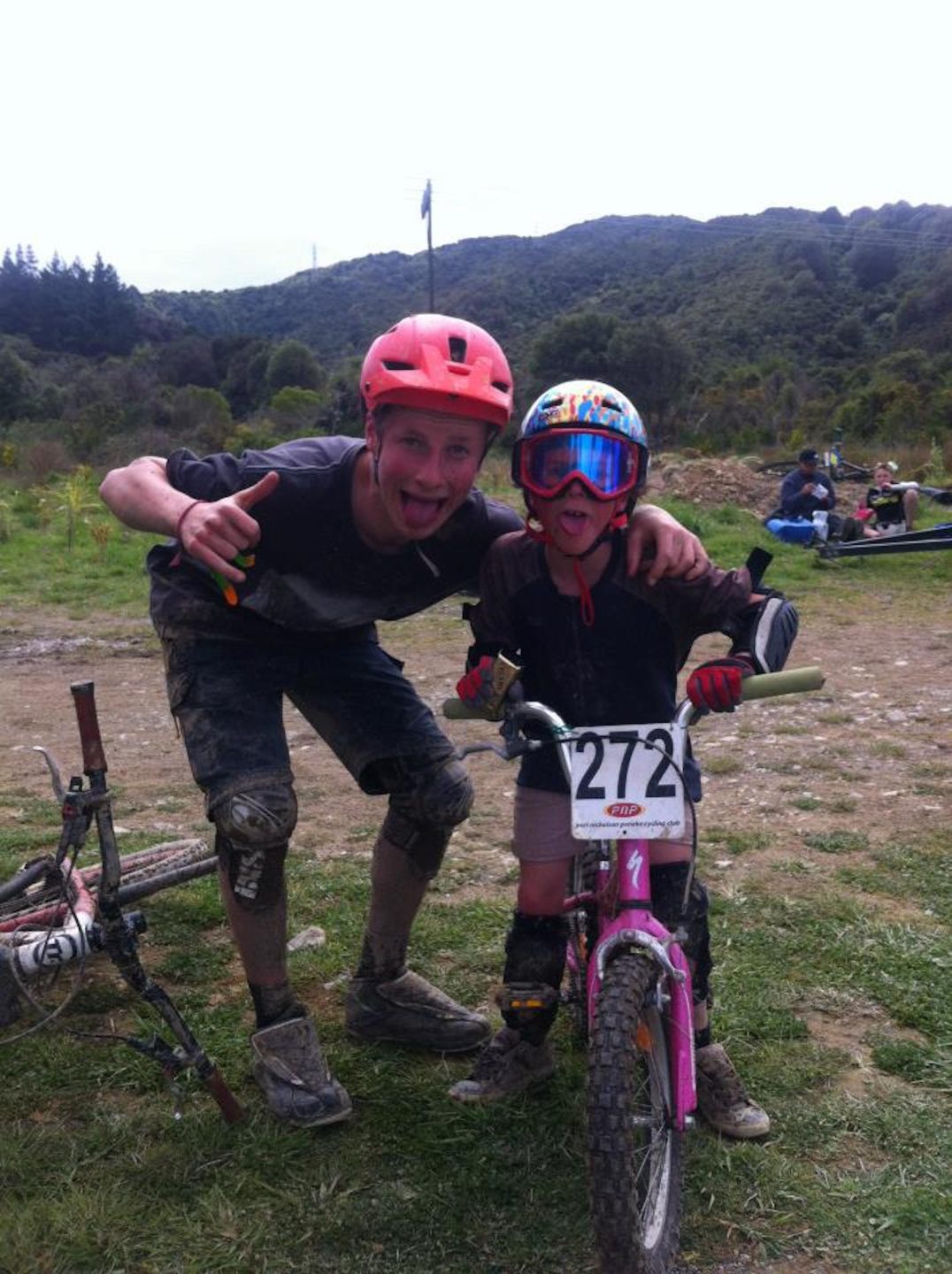
Erice rode with WORD in her early days.
“It was awesome to ride with some other young guns and to improve off each other,” she says.
When WORD was first set up, much of the mountain bike coaching scene was preoccupied with race times and competition placement, but WORD founder Ash Peters says there are other ways to measure success on a bike.
“What we’re after is the sense of belonging, the adventure, the connection to the land, to each other and to yourself.”
This mentality is, for Poppy, quintessentially Kiwi.
“The culture of mountain biking in New Zealand has always been just for the love of riding your bike, getting out in nature and ripping the trails with mates, heading out for an afternoon of building some fresh turns, and just having a laugh.”
What we’re seeing today, both at our local clubs and on the national stage, is the legacy of community groups passionate about mountain biking, and working tirelessly to engage people in the sport they love.
From Tauranga to Rotorua, Auckland to Wellington, Nelson to Queenstown, across both islands of Aotearoa, it’s the people digging trails, organising, and encouraging people to get out and shred who are driving the culture.
So, what makes New Zealand a great place for mountain biking? Jono echoes back what every club I’ve spoken to has said: “He tangata, he tangata, he tangata” – it’s the people, the people, the people.