
FREERIDE DEFINED
Five pro freeriders take on the endless big-mountain lines of Alaska
Words and images
Anthony Smith
From Spoke issue 87
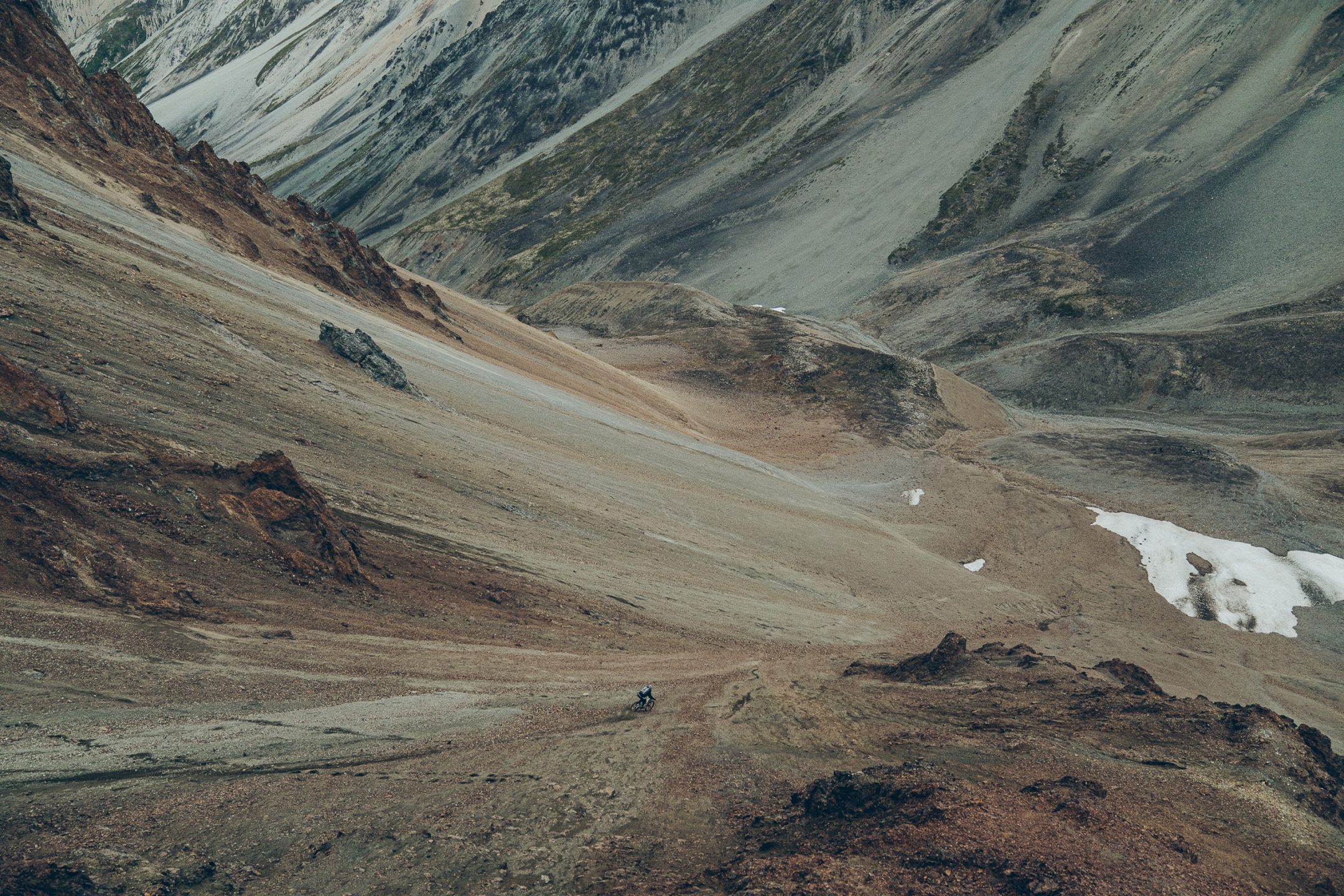
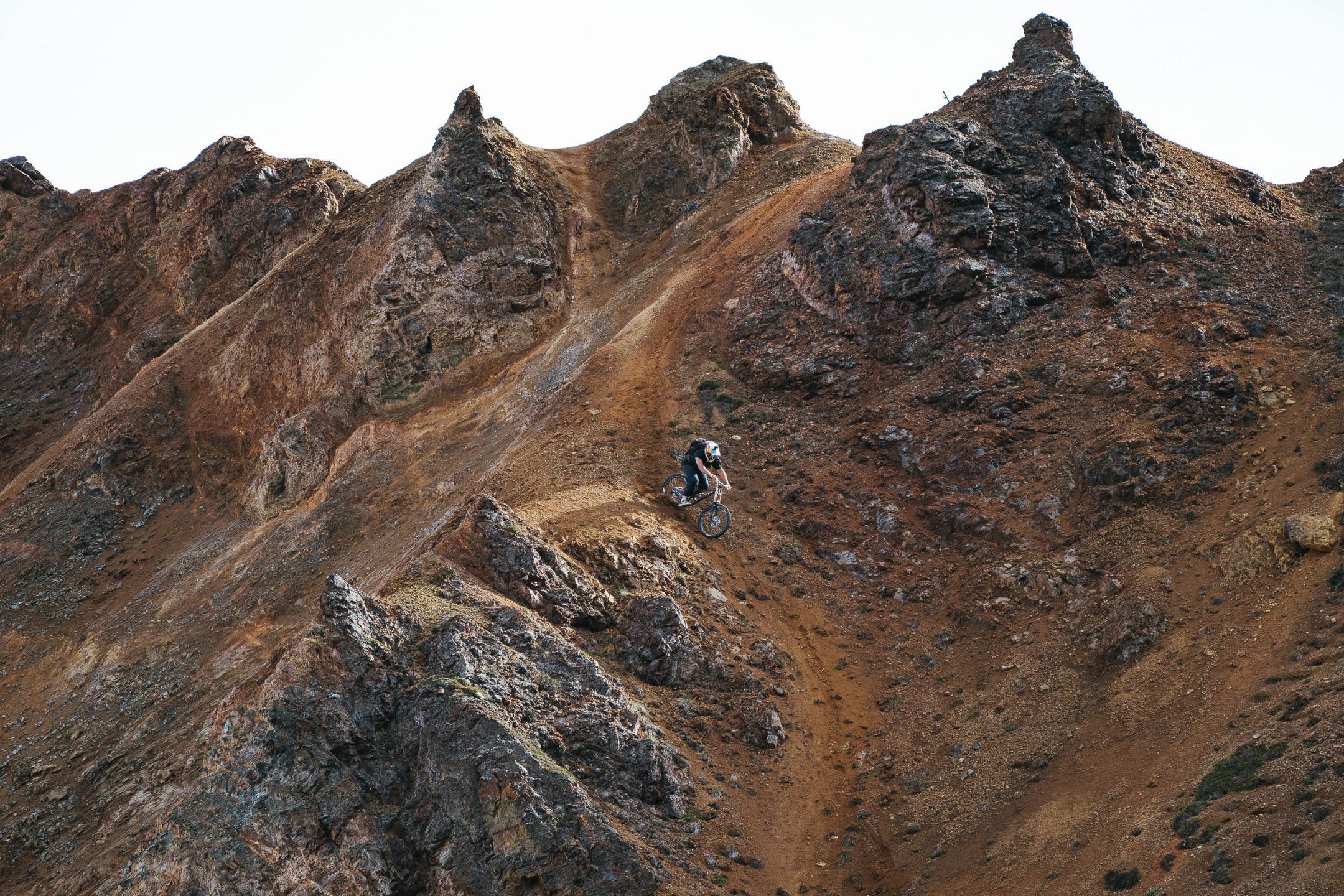
The five riders seemed to defy gravity, as if they were standing on a wall. From where I stood—on an opposing ridgeline a couple hundred metres away—the chute looked downright impossible. But perceptions can be deceptive in this vast Alaskan landscape.
Alaska has a storied history as one of the world’s most revered destinations for backcountry skiers and snowboarders. The expanses of ridable terrain during the long Alaskan winters are seemingly endless. It has long been a rite of passage for winter athletes who seek to push the boundaries of what’s possible on snow.
It’s rare for big, backcountry snow lines to translate into ridable mountain biking, though. Slopes with the right mix of slope, elevation, terrain, and accessibility are more of a fantasy than a reality, and there aren’t many places in the world that have the right recipe.
“It’s rare for big, backcountry snow lines to translate into ridable mountain biking…”
Perhaps that’s why big-mountain freeride is such a niche part of mountain biking. Finding terrain to not only ride, but also push the boundaries of what’s possible, is an endless search. Alaska though, seemed to have this magical combination in abundance.
We had spent the past week exploring a stretch of the Talkeetna Mountains, about 150km east of Anchorage. Our crew of riders—Kurt Sorge, Alex Volokhov, Nico Vink, Jaxson Riddle and Remy Morton—surveyed the mountainside in search of lines. The vast expanses of potentially rideable terrain here felt endless. And therein lay the challenge: where to start?
Scale and humility
That seemed like an easy enough question to answer as we set out on day one. An ochre and russet swathe of seemingly perfectly ridable slopes were visible from the road near our camp. Too easy. However, what looked like a short hike became a lesson in scale and humility that would set the tone for the rest of the trip.
Minutes turned into hours as our crew hiked up a trickling creek-bed toward the base of the slope. Excited chatter turned into muffled sounds of heavy breathing. As we drew closer, the walls of the creek’s canyon towered so high above us that the peaks were no longer visible. It felt as though we were being swallowed by that canyon, but we pushed forward. Just getting out was becoming as much of a challenge as reaching the summit.
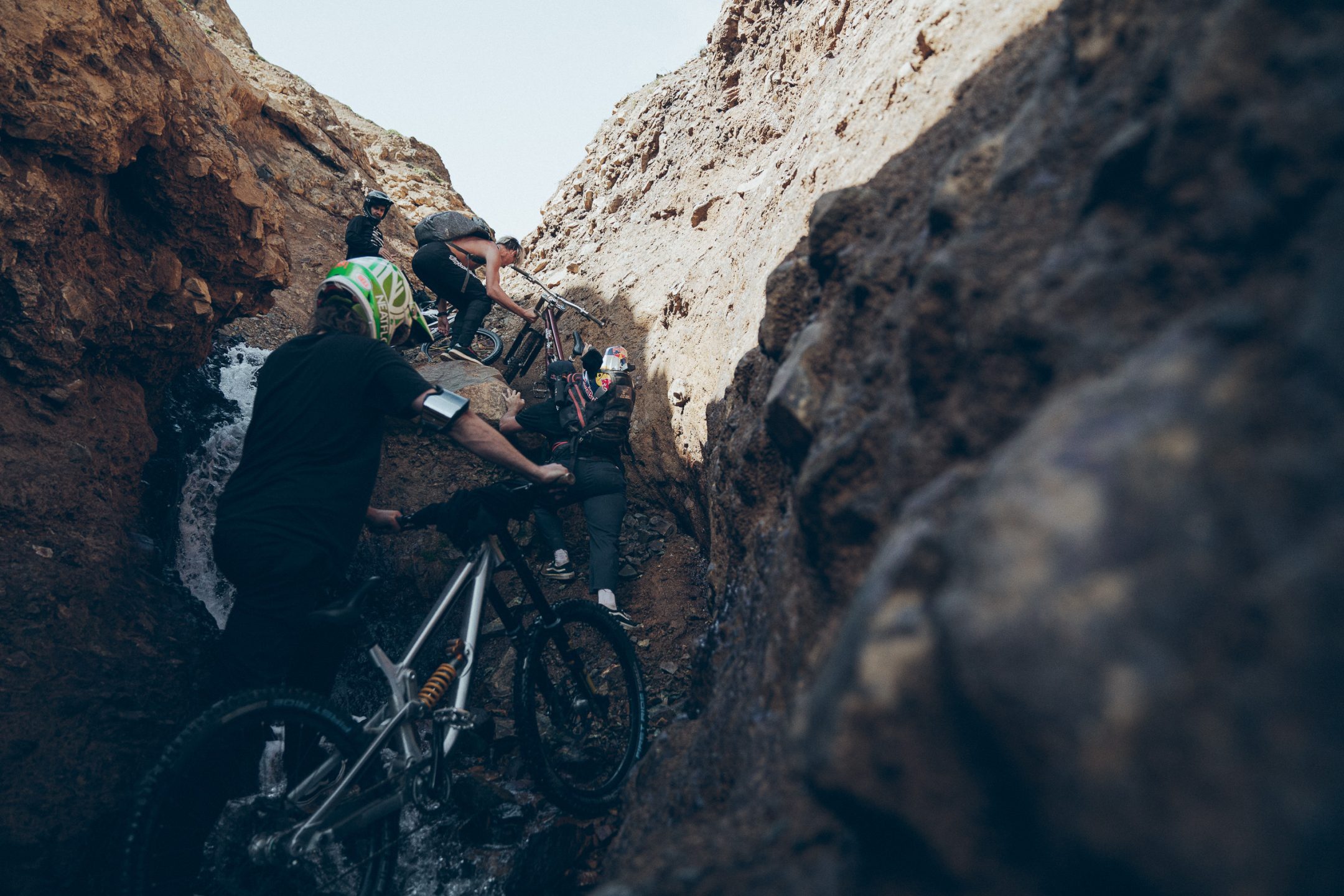
As we slowly emerged from the gorge, the once friendly-looking slopes revealed themselves as a minefield of boulders and scree. The tone changed. After five hours of hiking, we had “ended up in probably the gnarliest chute I’ve ever looked down in my life”, Morton recalls. “It was what I’d hoped for, but I didn’t know it was going to happen that soon.”
Morton had received a last-minute invitation to this trip just days prior. Along with Riddle, this was also Morton’s first foray into big-mountain freeriding. Both riders are at the forefront of freeride progression, but the raw nature of this Alaskan terrain had a way of humbling any bravado. Trust, humility and respect for the mountains are the measures of success out here.
“Trust, humility and respect for the mountains are the measures of success out here.”
“You wouldn’t really want to do this without people you trust,” says British Columbia’s Volokhov. “When you get their confirmation, it kind of makes you feel better about everything, and they’re all your lifelines out there, too.”
Confirmation of that first drop-in came from Volokhov himself. After what seemed like an hour of scouting drop-in points along the ridgeline, Volokhov’s voice came over the radio that he thought this would “go”, and he was ready to drop. Cameras began rolling far below as his fellow riders looked on nervously. This was the moment we would find out if this terrain was ridable.
Volokhov dropped in with shocking speed and confidence, beautifully carving his way through the first chute and laying perfect tracks down the untouched slope. A collective sigh of relief gave way to howls of joy across the radio. The seemingly unlimited potential of these mountains was not just a dream anymore.

Uplift assist
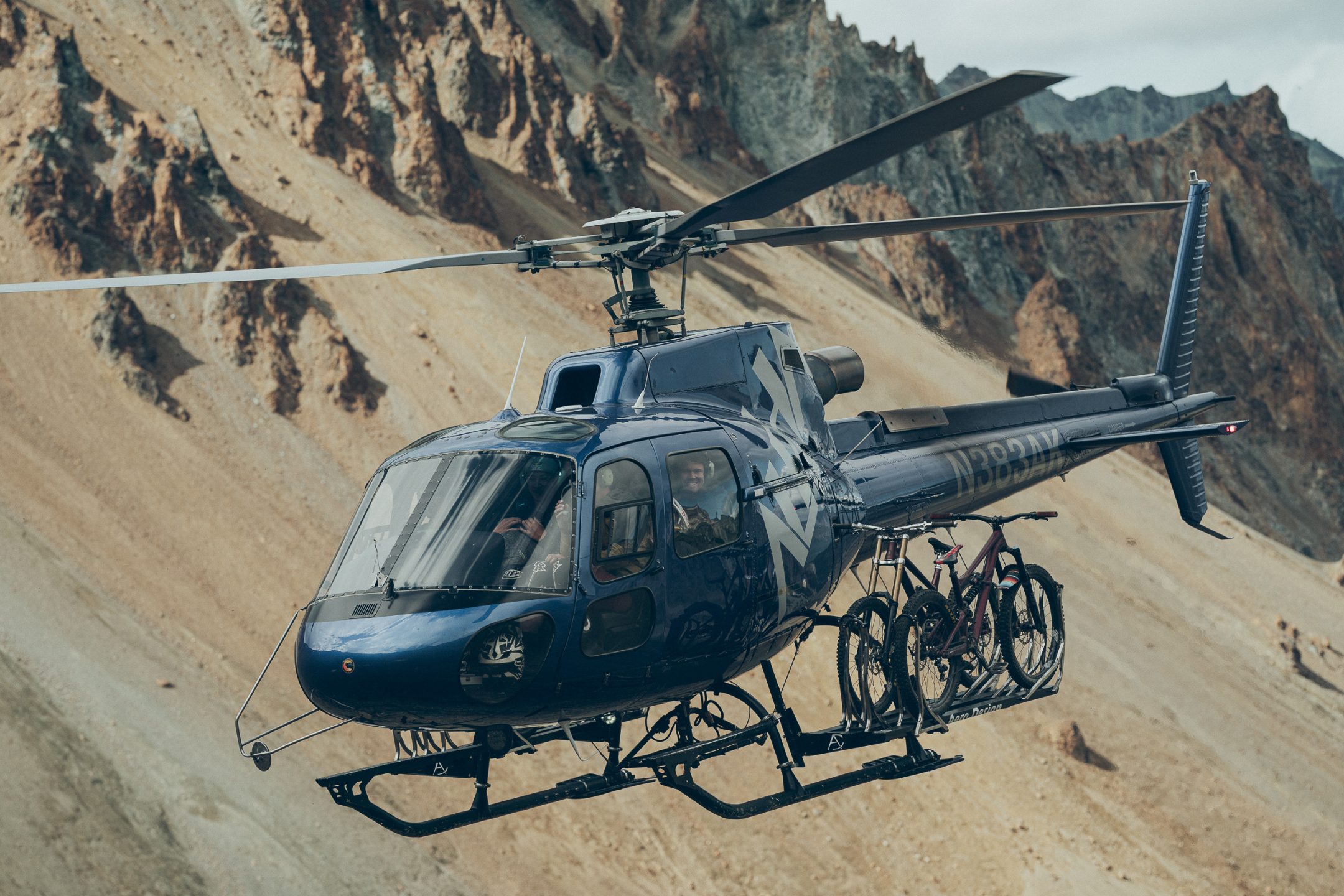
Getting that one, most accessible line had been an all-day effort. Just as for our snow brethren, the most efficient tool for our crew to explore these vast Alaskan expanses was going to be the helicopter.
In a lot of respects, a helicopter seems like the antithesis for backcountry exploration on a bike. It’s not lost on Vink, who has explored big-mountain terrain all over the world, both under his own power and by helicopter. But he knows just how crucial a tool it can be.
“This kind of riding, the lines we’re riding, without a helicopter, are almost like, I wouldn’t say impossible, but it would be a bit of a mission to get to them.”
The concentration of ridable terrain in the Talkeetna Mountains is remarkable, Sorge enthuses. “Just sitting on top of some of these mountain peaks, looking around at glaciers surrounding you and 360-degree options of rideable lines.”
It’s perhaps one of the few places in the world where you can simply point out a slope from the air and set down for a first descent. To make the most of a place like this on foot was simply unrealistic.
Alpine mirage
If we were excited about what was visible from the ground, it’s hard to describe the emotions on our first helicopter flight.
“Flying from one valley to the other, like it’s nothing, you see potential lines everywhere,” Vink says.
“It’s a bit overwhelming. It feels like we’re in Jurassic Park or something. It’s just sensory overload. It’s insane,” Volokhov agrees.
Three-time Red Bull Rampage champion, Sorge, who has built his career travelling the world in search of this type of terrain, recounts the inherent problem of scouting lines from the air.
“Everything looked great from afar, you know, pretty much every mountain around here looked like it’s going to be perfect riding terrain and then, jumping in the helicopter, looking around, it looked like there were endless options.
“Even buzzing closer to look and make sure it was all good, it still looked amazing. But when we landed, we noticed how big some of the rocks were.”
Sorge though, happily shouldered the responsibility of leading the group to what he thought had the most potential.
“Kurt’s done this stuff a lot,” Volokhov reassured. “He was kind of the guru on the trip. I think he’s spent more time (in terrain like this) than all of us combined. I trust anything he says when he is looking at a line.”
I tried to remember this as I stood mid-slope, trying to find stable footing among the loose, jagged rocks. In stark contrast to the previous day’s celebratory radio chatter, everyone sounds cautious. It wasn’t working. The rocks were too big, too unpredictable.
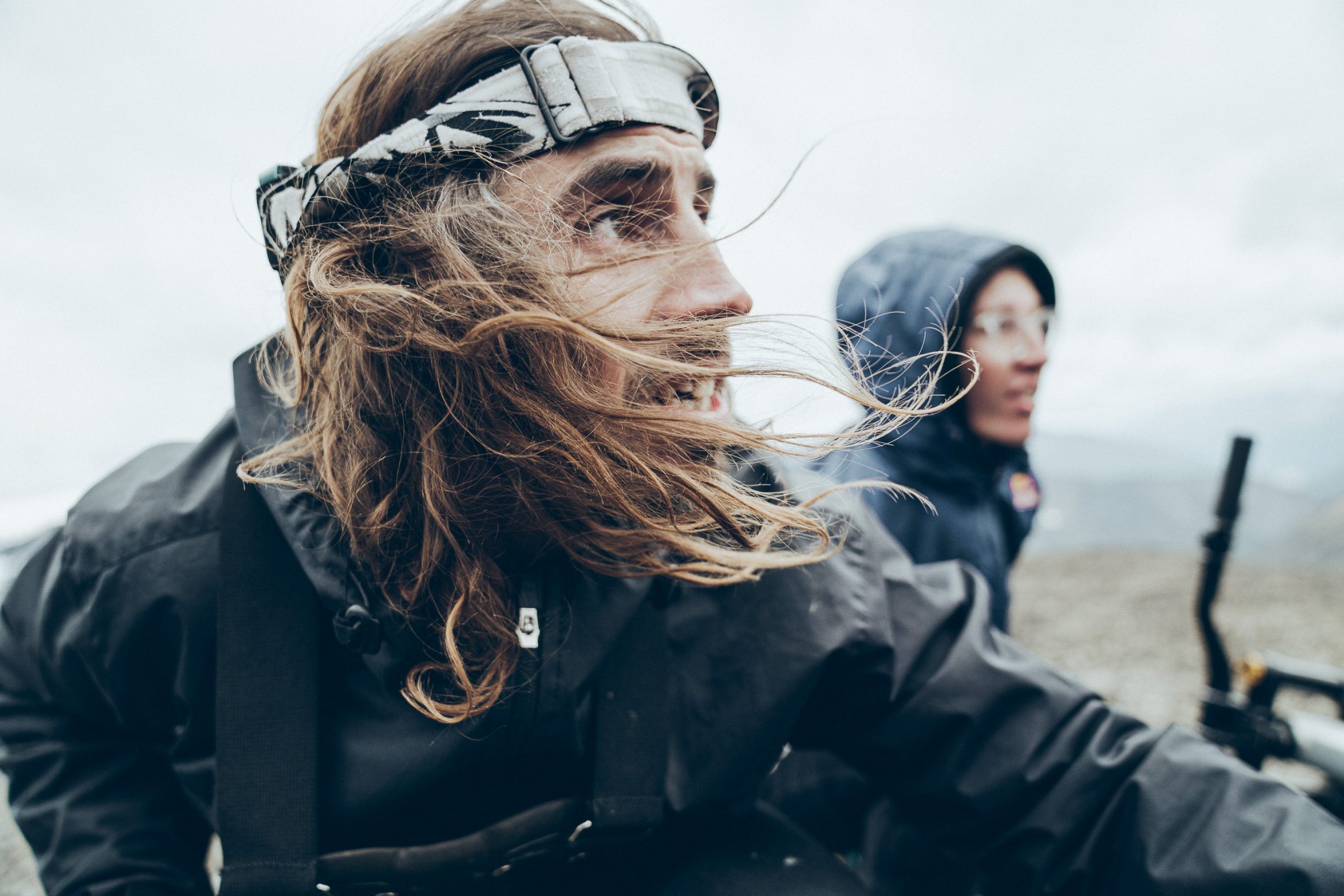
“When I was a bit younger, any day I was out there, I wanted to do the gnarliest thing possible. And now I’m listening to the signals more, you know?”
Nico Vink
The veteran riders like Vink have learnt the art of taking a step back when the risk outweighs the reward.
“When I was a bit younger, any day I was out there, I wanted to do the gnarliest thing possible. And now I’m listening to the signals more, you know? If I’m not really feeling it, I chill … I still want to go big and send it, but more on my own terms, whenever I feel good.”
It’s not lost on Sorge what the real recipe for success here will entail.
“These backcountry trips, you really learn that time is your friend. Having the time to just get used to the terrain.”
Even newcomer, Morton, stresses the importance of this measured approach.
“The biggest thing for me right now is I’ve rushed into things before. I told myself on this trip that it was going to be new, so I didn’t want to rush.”
It was a humbling day in the backcountry and a reminder of the high stakes of big-mountain freeriding. The crew put it down to experience and left healthy and intact, ready for another attempt tomorrow.
Harnessed momentum
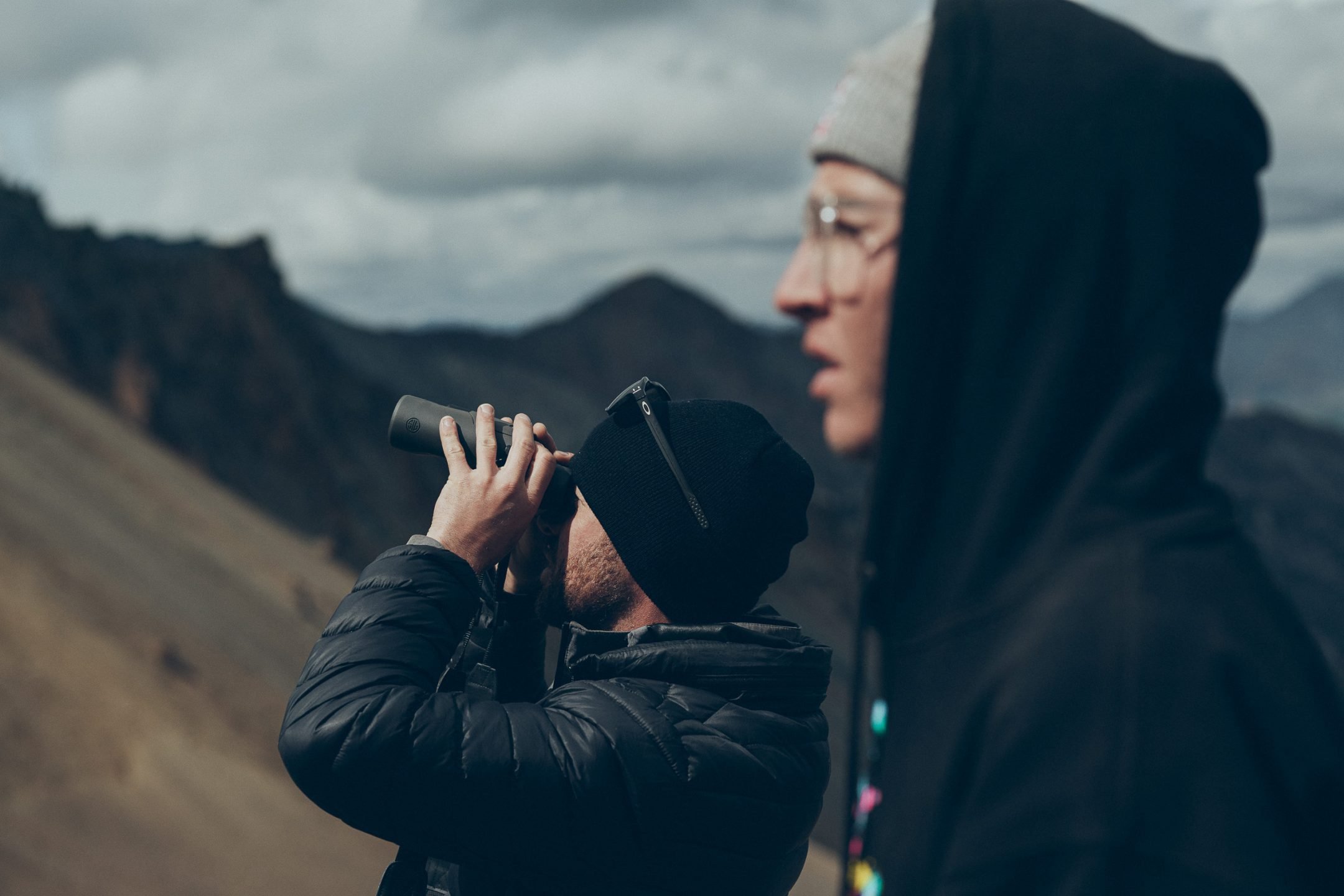
Using binoculars from our RV park home base, we could see a sliver of rust-coloured dirt in a zone we hadn’t flown over or scouted. Its colour, strikingly, was like the slopes from the victorious first descents a few days prior.
As we approached, clouds whipped across the ridges, creating slashes of light and shadow. Alaska was manifesting in front of me, a dazzling chimera of colours and textures.
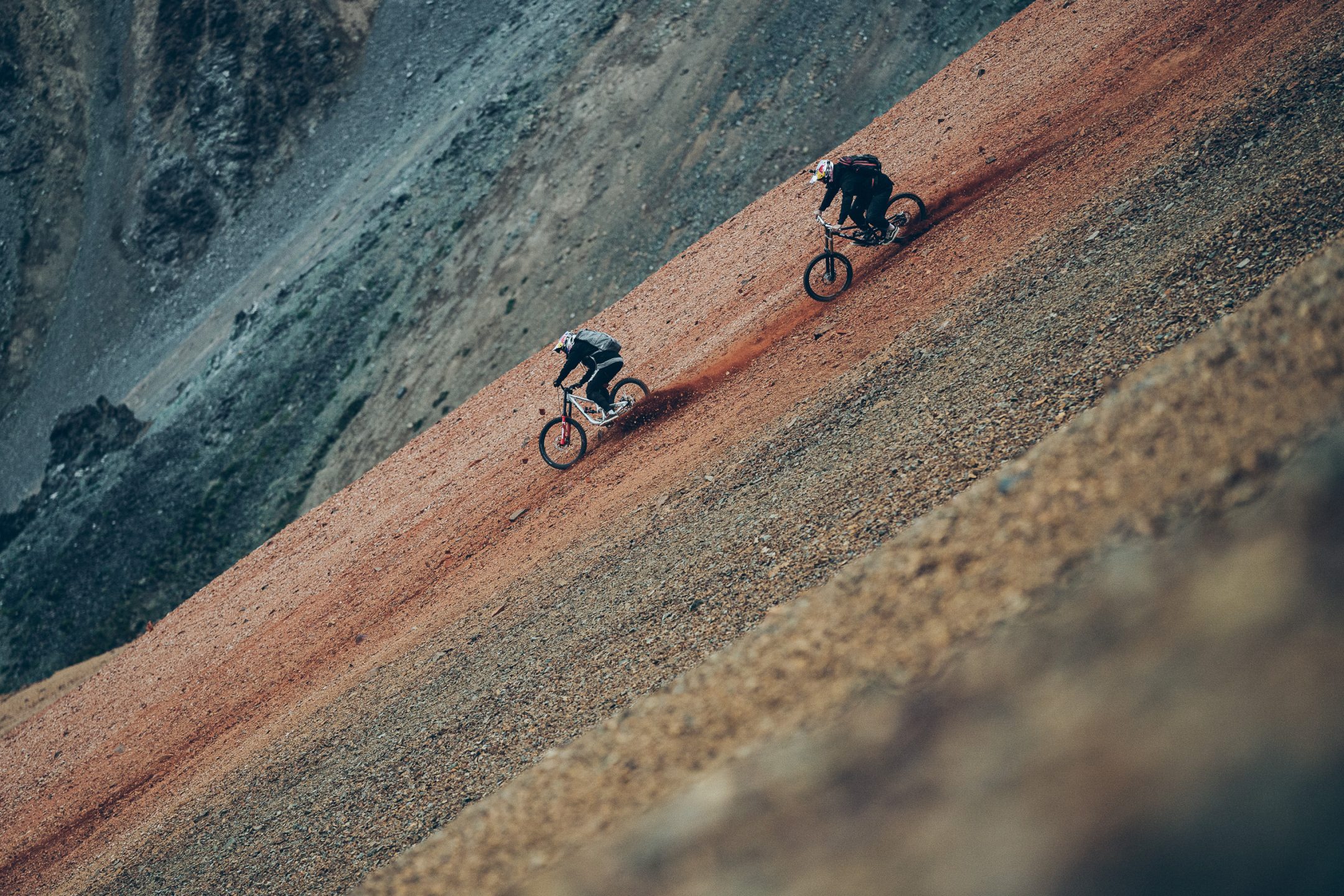
We landed at the bottom of the runout, and you could see the excitement in the riders’ eyes. It was “a kind of volcanic style terrain with an open face (where you) go wherever you want, and go as fast as you want”, Vink recalls.
One by one the riders dropped in. Rocks flew, tyres slashed—this was the definition of freeride.
“I think each rider has their own vision of what they want to get done here,” says Riddle, and these slopes created the canvas for those visions to be realised.
“It just kind of creates this perfect moment where you’re down to send it and not like be as scared about it,” Volokhov explains.
The momentum built from that day’s early laps created a flow-state-like energy for the crew. Everyone felt confident, not only in their skills, but their ability to read the terrain. They were looking at the landscape through a new lens. The previous days seemed less of a mystery; they’d unlocked the potential of this place.
As we flew over the next ridge, a pristine bowl filled with seemingly endless options presented itself. For the first time each rider had the opportunity to choose a different line that would funnel them to a perfect runout.
It’s what everyone had hoped to find here, says Morton.
“No matter what you do, everyone’s happy and everyone supports each other; everyone knows that there’s risk in your riding at the level you feel comfortable at.”
If Vink’s goal on the trip was to “ride as fast as I can down big mountains”, he certainly achieved that at this spot. Tucked in and fingers off the brakes, it was like this line was tailor-made for him.
Morton recounts the feeling of “taking in every skill I’ve learned from every discipline of riding I’ve done, but it’s all in a space of 30 seconds”. It was in this spot that everyone could really express themselves.
“It’s a really cool feeling when you get down, and you mightn’t have done (a line) as crazy as someone else’s, but the hype’s just as high.”
As one of the most experienced riders on the trip, Vink relished everyone’s accomplishments.
“It’s just sick to see how everyone is interpretating the mountain differently.”
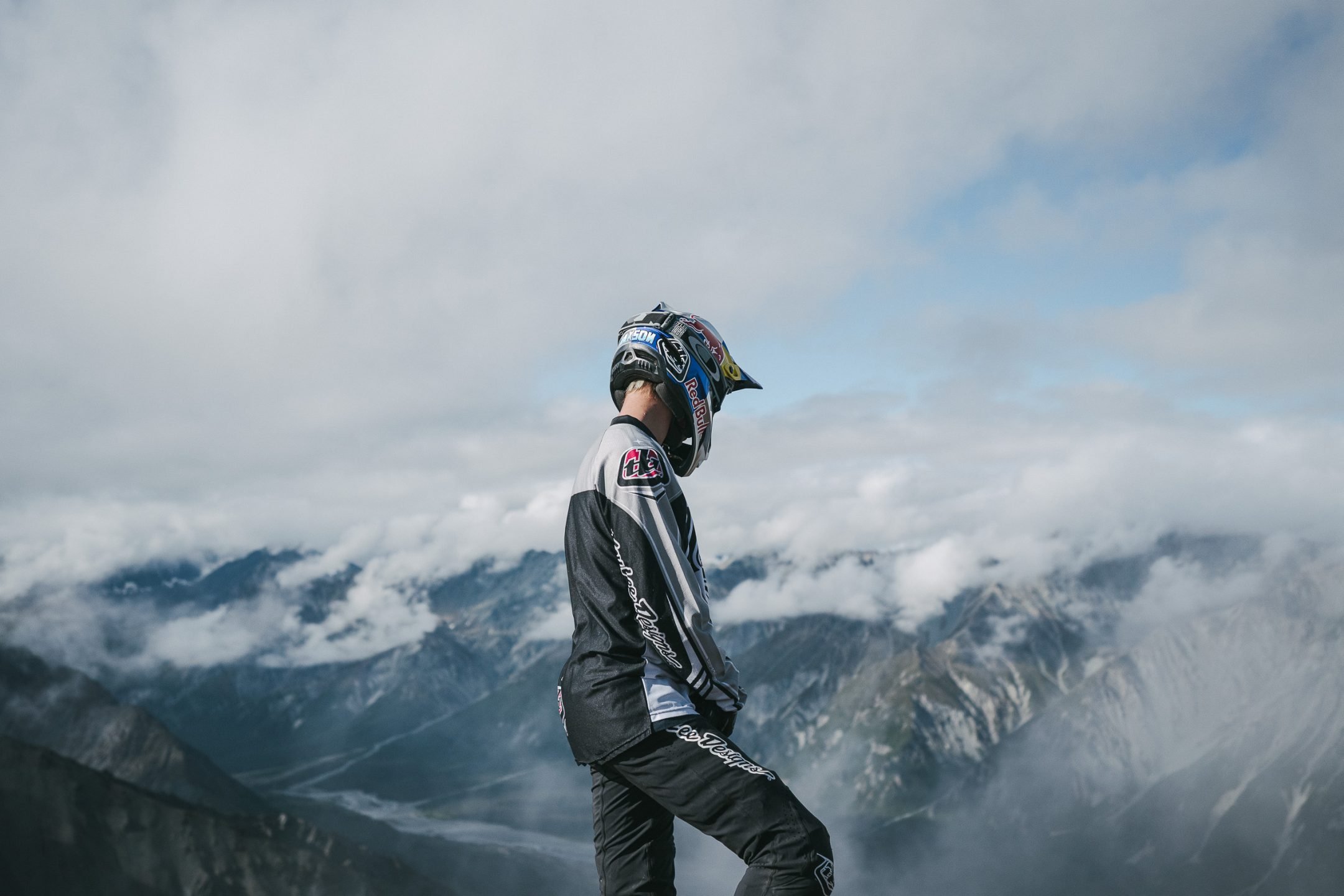
Exhausted and elated, we stood atop the third ridgeline of the day in the evening Alaskan light. No-one seemed in a rush. Perhaps it was fatigue, but really “it was also just enjoying being in the places where we are … slowing down a bit and looking around and like just enjoying the full experience”, Vink explains. Everyone obliged.
After so much success and so much vert in one day, it seemed fitting to finish with a party lap. Like skiers off the first chair on a powder day, the five riders carved and flowed down the red slopes to the waiting helicopter below.
Back to the beginning
There was still one nagging question: what lines could be unlocked at the first spot if the five-hour hike was taken out of the equation?
The decision was made to get helicoptered to the top and hike out at the end of the day. After all, time was our friend. It wasn’t the hike out that made the crew nervous; it was the isolation.
“One rock could end your whole trip, you know?” Volokhov says. “You’re remote, so you obviously don’t want to get hurt out here.”
“You’re at the top of the massive mountain, you’re going to drop about 2000 feet and you have no idea if it bluffs out or if there are cliffs or rocks.”
Remy Morton
The risk was playing on everyone’s mind as Volokhov inspected a line that would drop him into the opposite side of the valley to where we’d scouted.
“It was just a channel through the gnarly rock at the top, and mandatory cliff out of it, to just this massive, massive, gully all the way down into the riverbed,” remembers Sorge. “It takes a fine eye to see a line like that.”
Morton was fully aware of what Volokhov was about to attempt.
“You’re at the top of the massive mountain, you’re going to drop about 2000 feet and you have no idea if it bluffs out or if there are cliffs or rocks.”
We all watched nervously as Volokhov prepared to drop into the unknown. Knowing when to step back and stay humble, or when to say “now it the time” is never a right or wrong decision. It’s about trust and confidence.
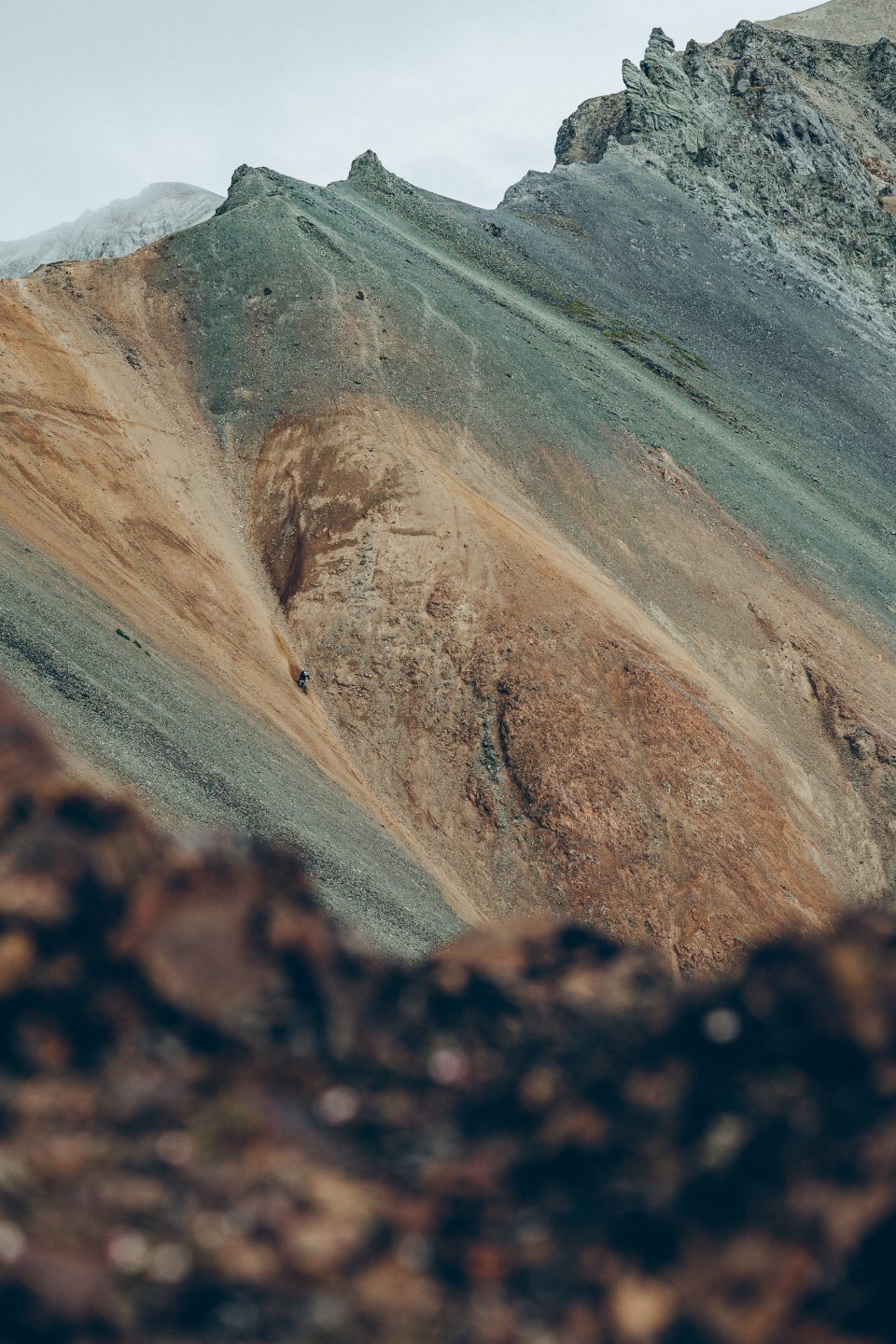
As Volokhov dropped, the only thing you could hear across the valley were his tyres and brakes as he picked up speed towards the riverbed below. The nervous silence was replaced with echoing screams of excitement as he finally came to a stop, a tiny figure in the distance.
“I think that was probably the gnarliest thing I’ve ever seen a rider hit, to be honest,” Morton exclaimed.
There were many unknowns coming into this trip. It’s not lost on Sorge how special it was that the riders were willing to take those risks.
“There’re some stresses that come with that, but everyone worked really hard and put in a tonne of effort and leave this place feeling accomplished.”
Accomplishment looked different for everyone in these mountains. For some it was pushing their limits, for others it was riding to their limits and just taking in the experience. Regardless of the approach, Volokhov knew one thing for sure.
“We’re going to remember these laps for the rest of our lives.”