
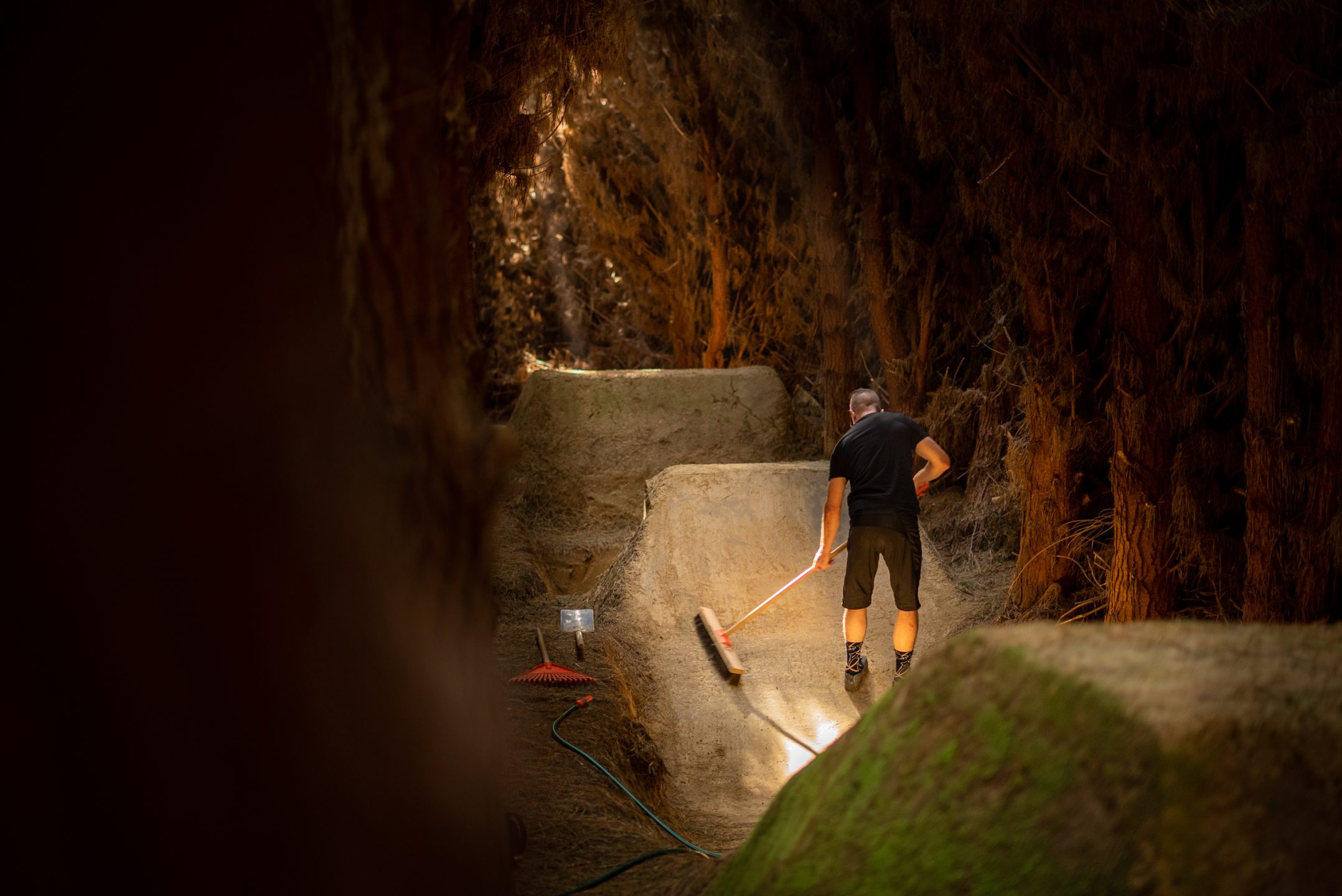
DIGGING THE DREAM
What would you do if you had access to a plot of land with dream dirt? Build your own riding nirvana, of course.
Words
Andrew Hamer-Adams
Images
Boston Bright, Caleb Smith
From Spoke issue 87
Watching the sun disappear over the hills with a beer in hand, surveying years of hard work, we never envisioned that this place would turn into the trail network we have now. When Hamish and I went through photos and memories to write this article, what surprised us most was the pace of development. It’s a story that spans a decade, yet the majority of the trails were built within 18 months. The recipe was simple, really, and anyone could do it. It just takes thousands of work hours … and a large plot of private land.
The Farm: we reckon it’s a special spot. Just far enough out of Wellington to escape the worst of the weather, it’s the perfect place to build our own piece of riding nirvana. The land is split in two by a steep valley. Out the back is a large amount of untouched native bush and a small patch of mature pines. There isn’t huge elevation, but the canopy is immense and feels like a truly special place to be. At the front of the block, closely-planted pine trees create a natural weather barrier. It’s perfect for jumps, even in a howling southerly. But it never used to be like that.
When I first encountered Hamish many years ago, I’d never met anyone as obsessed with the sport as he was. His whole life revolved around bikes. He started on BMX, riding mostly street and dirt jumps, and also raced national downhill events for a number of years. He was deeply involved with the local trail-building scene and dedicated massive amounts of time building trails for his friends and the community.
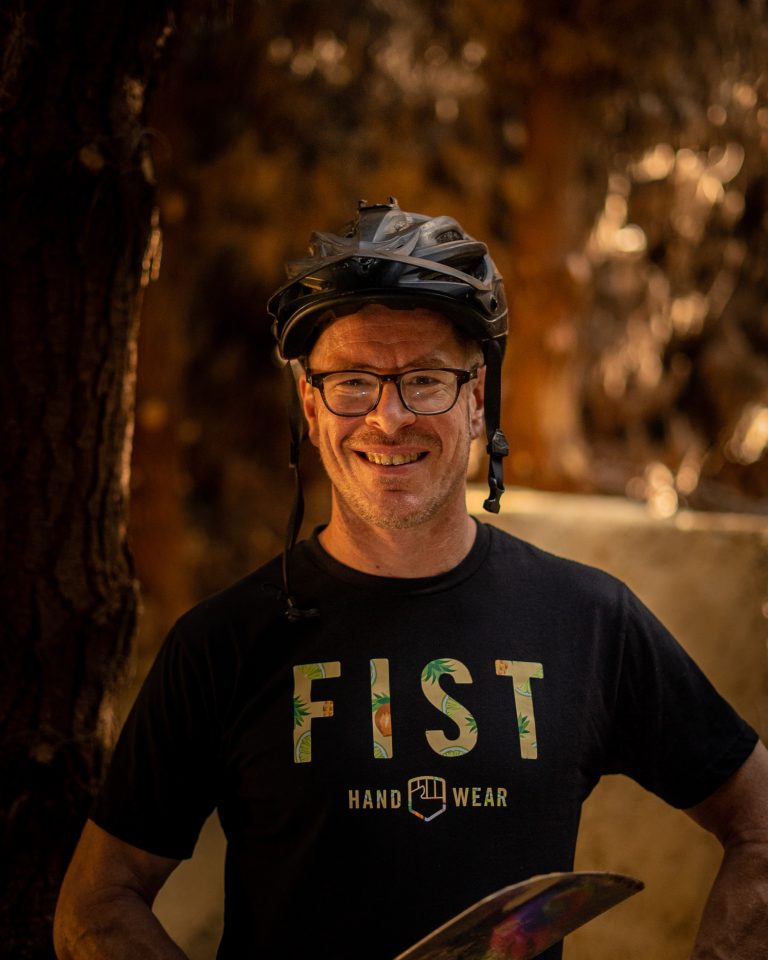
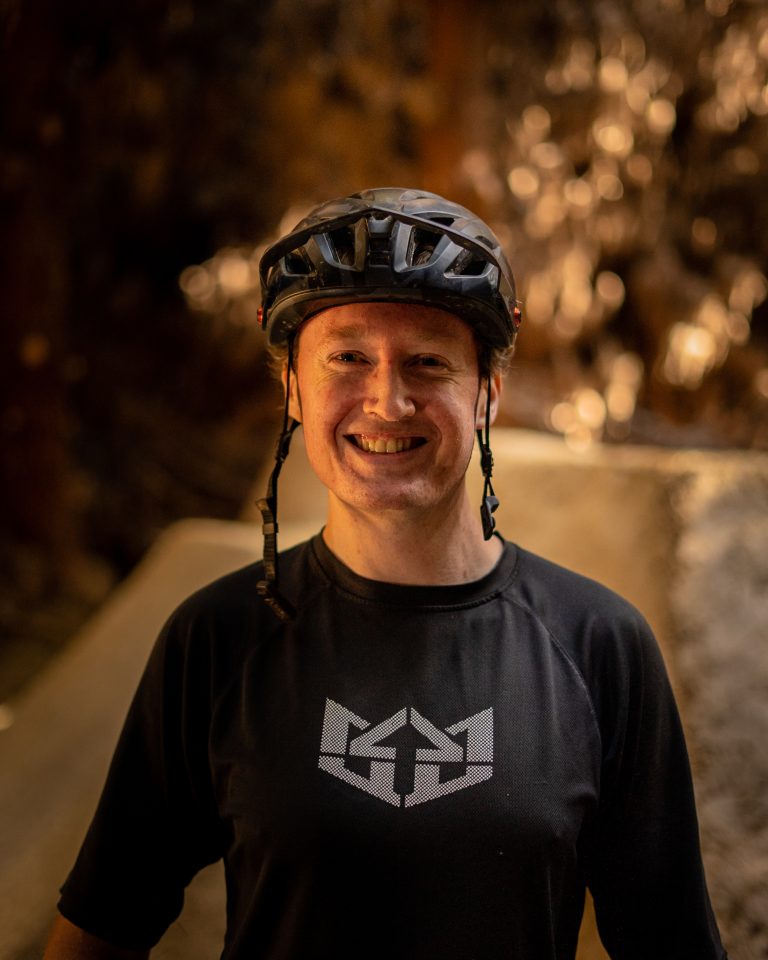
Hamish is one of those people who has seemingly unlimited motivation and can convincingly sweet-talk any poor soul to help him with whatever plan he has up his sleeve.
He was an early member of the Wellington Mountain Bike Club, and part of the crew to get access to Long Gully to build and maintain tracks there for a number of years. He spent months helping to create Jail Brake with the Miramar Trail Project, making it wide enough so his buddy, who was paralysed, could ride down it on his four-wheeled bike.
Along with friends he’d coaxed into helping, Hamish proceeded to sink hundreds of hours into creating the first Miramar pump track. So many people enjoyed the end result, but help was always hard to find. I think this is the reality of trail building: it usually takes one or two extremely motivated and time-rich people to make something for everyone to enjoy. Hamish really takes pride in his work, and I can see that he’s secretly chuffed whenever someone compliments the work he’s done.
“Hamish is one of those people who has seemingly unlimited motivation and can convincingly sweet-talk any poor soul to help him with whatever plan he has up his sleeve.”
When the opportunity presented itself to build trails around the world for NZ Trail Solutions in 2009, it didn’t take much convincing for him to quit the day job. Hamish spent the year in Chile and Jamaica as part of teams building world-class trails. The hard work and experiences he gained while doing this paved the way for what we have at The Farm now.
We had always talked about building trails at The Farm, but it simply wasn’t well suited for trail building. Originally, the front of the property was very different, with grazing paddocks and nothing in the way of shelter. We knew building jumps so far out of the way on bare pasture would be a frustrating experience, especially with the Wellington wind and rain regularly tearing down our hard work.
In 2013, my wife and I bought a house at the bottom of the access road, which I would call a good life choice. Private trails outside my doorstep? Yes, please. Now there was cheap labour living at the trailhead.
We started talking about it more and the idea gained traction. I think the prospect of having company while digging trails made it much more appealing to Hamish. I’ve always found mountain biking to be social, and while trail building definitely has a solo aspect to it, it gets pretty boring just talking to trees and a spade.
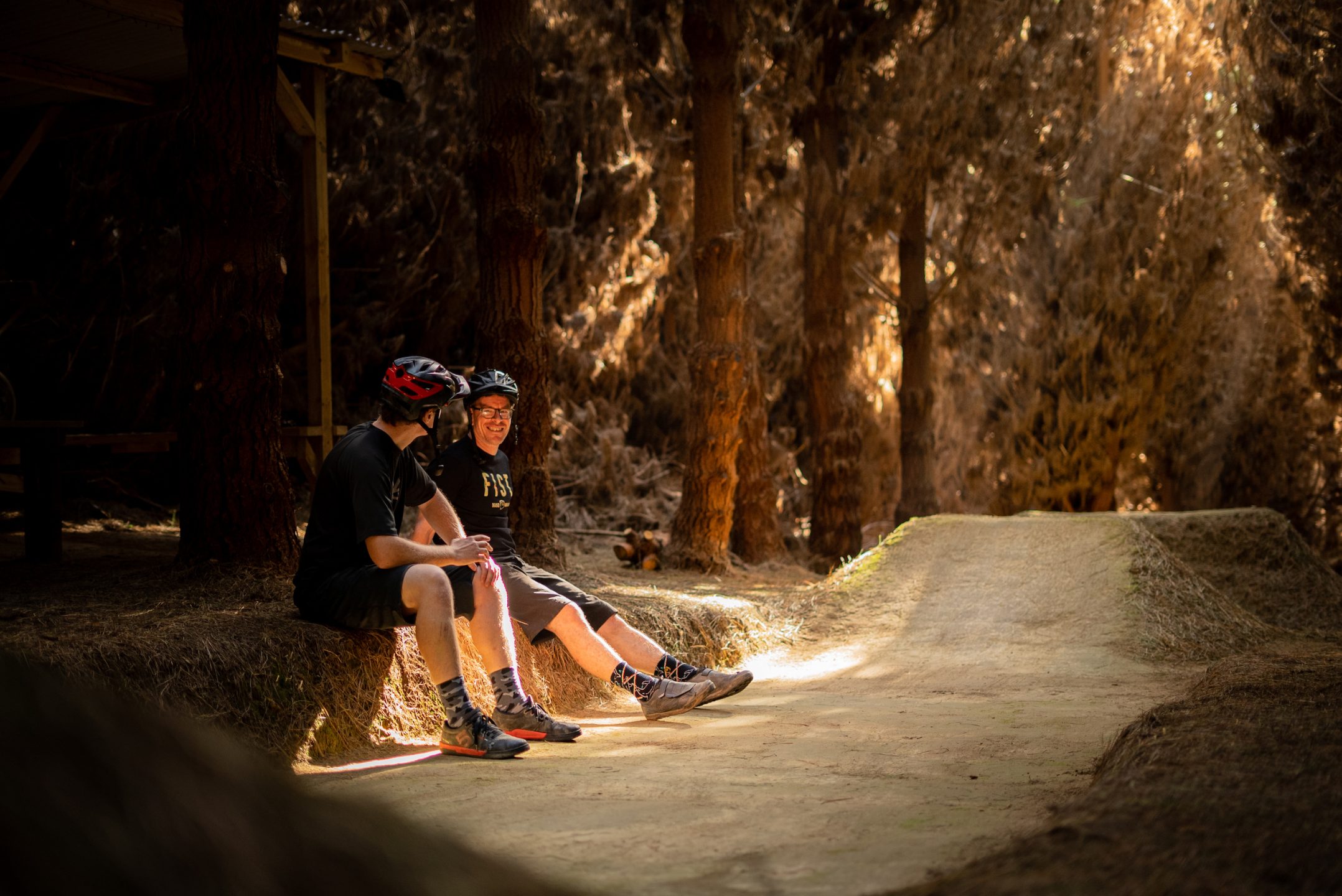
Slowly but surely, The Farm started to see some activity. There were many hiking missions to scope out what to build and where to build it. The highest point of the access road was the obvious starting option. It has a stunning view of the sea and the native bush, easy 4×4 access, and the treeline at its doorstep.
At the time there was no big picture – we just wanted to build a few jumps. The trees were still quite young at that stage, so all we could do was trim them back in the rough area we wanted to build through. If we’d known the scope of things to come, we would’ve cleared far more. Isn’t hindsight a wonderful thing?
The columns are tightly spaced, no more than four metres apart, which doesn’t leave a lot of room to manoeuvre. We scratched about, creating 50to1-style corners and coming up with ideas, but life continued on while we waited for the trees to grow.
Shovels didn’t properly hit the ground until mid-2018, starting with the first of our jumps. I started to see Hamish out at the farm three or four times a week. He’d turn up with building supplies, wood and concrete blocks. With beer, chippies and mini donuts on offer, I couldn’t really say no, so we got stuck in.
“It didn’t take long to realise we’d hit a gold mine; the dirt at The Farm is amazing.”
Digging escalated at an alarming pace. I guess it became an obsession. We chose a place to quarry dirt from and started digging.
It didn’t take long to realise we’d hit a gold mine; the dirt at The Farm is amazing. It’s not the hardiest clay in the world, but it’s sandy, quick-draining and easy to dig. No rocks, no roots, just a layer of topsoil and then beautiful clay as far as you could go. We wouldn’t have the number of trails there are now without that clay. It’s something special, and not something we take for granted.
We started small, building a couple of corners and two smaller doubles down the side of the ridgeline. Hamish would be up at The Farm while I was working, and I’d join him in the evenings. It still amazes me how much dirt he can move when he’s motivated.
Within a couple of months, we had a line running – five jumps and a few corners – with plans to start on some larger doubles at the top.
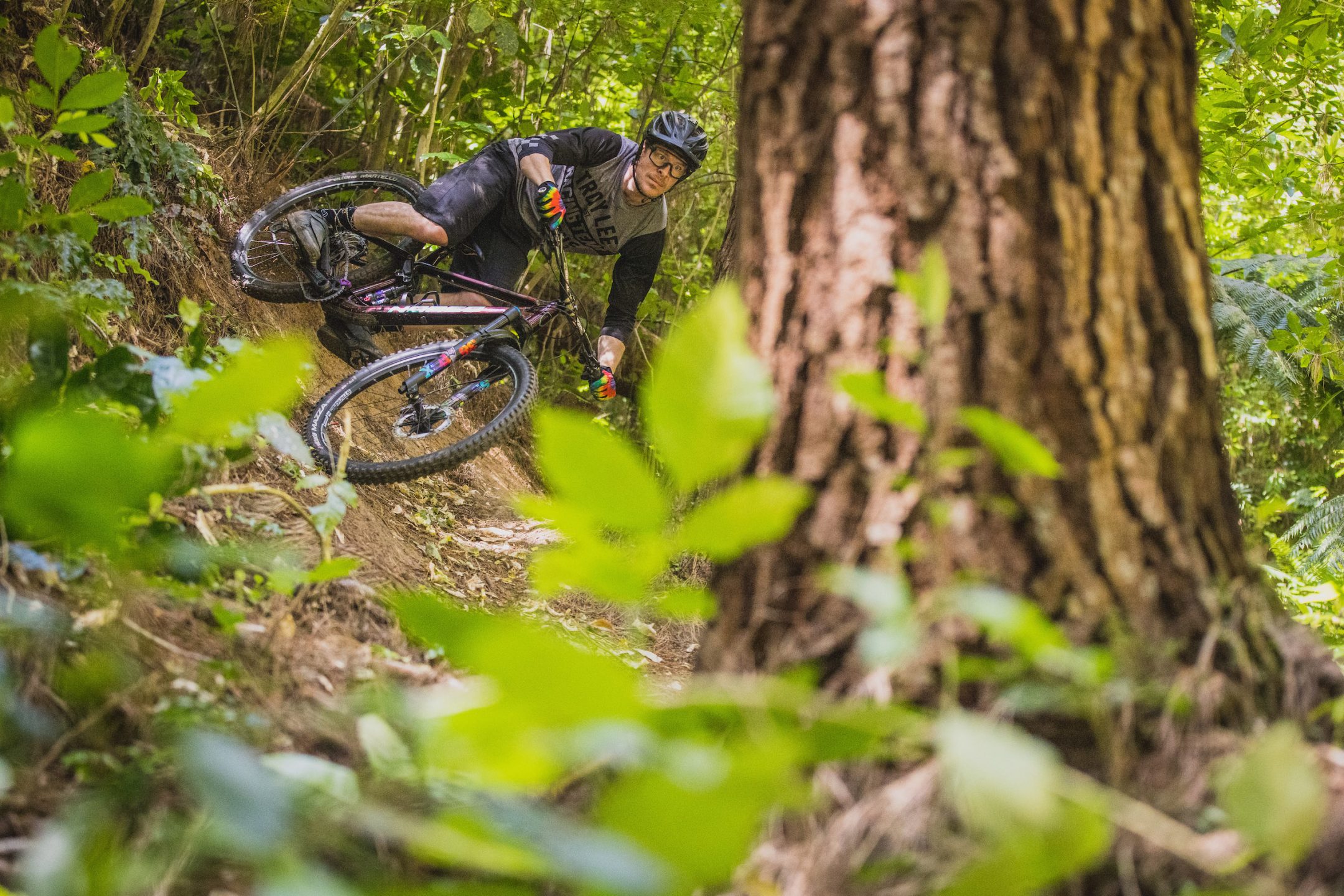
By this time, winter conditions had made the clay too wet for digging, so we built our first trail, “Kererū”, in the native forest. The ethos with the native bush is to avoid cutting down trees; it’s a special place, and we want to minimise our impact on the land. While this makes for technically difficult trails, it also means they’re quick to create.
We found our rhythm pretty early on, focussing on jump-building when the digging conditions were good in the off-seasons, and scratching in native trails when it was too wet. When there was a proper southerly, Hamish would scour maps, come up with trail names, and make intricate signs that you see placed around the trail entrances.
By the end of 2018 we’d built a trail loop into the back valley, joining the native bush to the pine forest with another downhill trail called “Loam Fest”, which finished with a road gap and a brutal uphill to get back to the trailhead.
Getting this loop in wasn’t easy, requiring large span bridges to be built between stream crossings, but it meant there was now a way to circumnavigate the farm on bikes. We were stoked.
One thing we’ve realised is that moving a huge pile of dirt takes a lot of time and effort, so putting it in the right place first time is key. We’ve learned this the hard way a few times now!
The first lip was built. Hamish got excited while I was away and placed a pile of dirt, in what I’d call an optimistic place, about 35 feet from the lip.
The first attempt didn’t go well, crushing himself into the ground from a great height. Somehow unfazed he tried again, but this time pedalled into it, with similar results. Lesson learnt, and a landing was built upon the face imprint in the ground.
When I say “placed”, I mean it took a solid three weeks of digging. Building landings requires the most effort when creating jumps. Landings need to be big, and this equates to a lot of dirt.
There’s a reason why private jumps usually have gaps between them – it’s hard work for the trail builders!
“There’s a reason why private jumps usually have gaps between them – it’s hard work for the trail builders!”
We sat back and admired the first decent jump on The Farm. Jumps always look amazing when they’re first built, nicely packed-in and shaped.
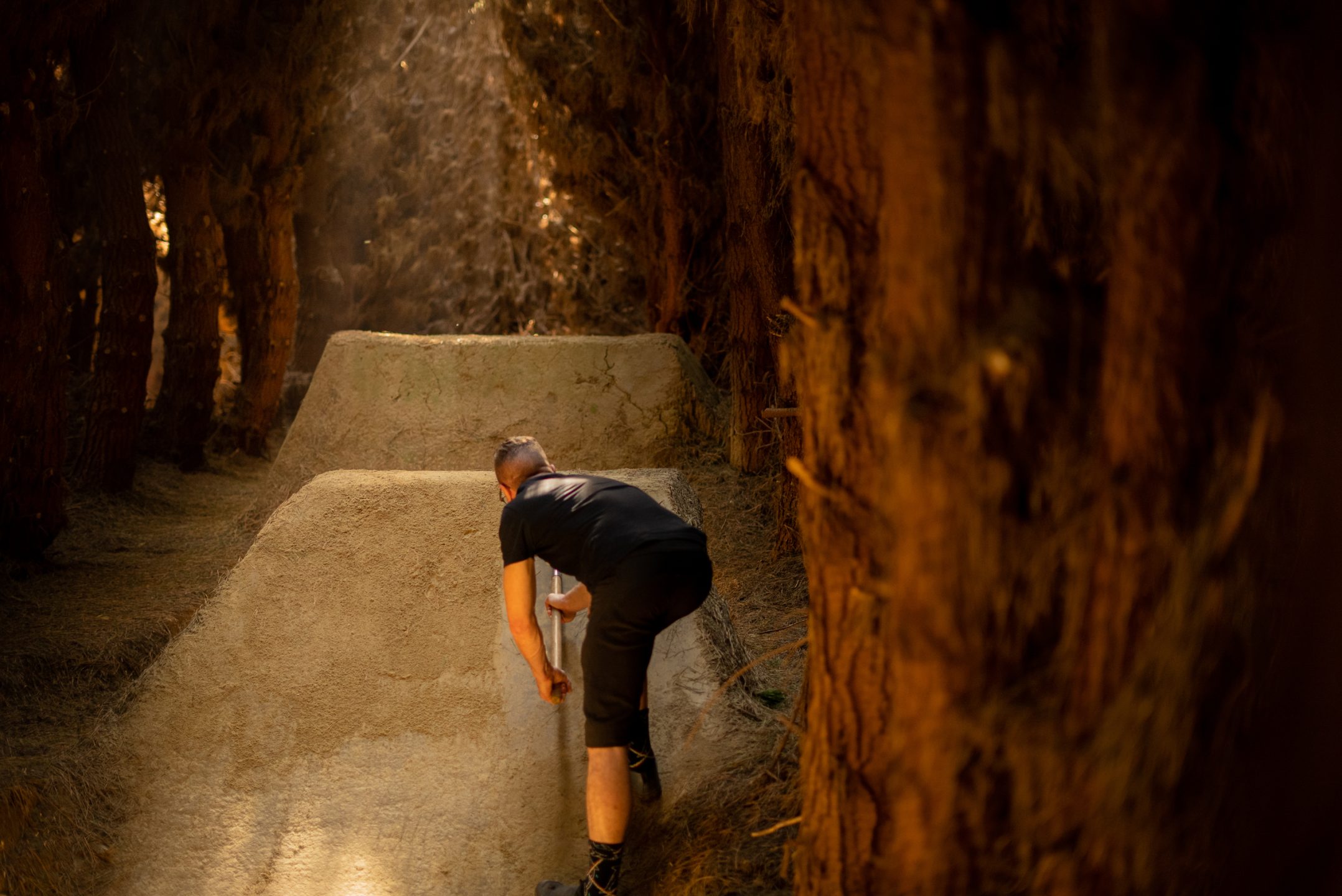
Hamish’s special stainless steel spade, now illustriously known as the “silver spade”, has the perfect shape for slapping lips and has been smoothed and weathered over the years. It has been through multiple handles and has shaped every single jump on The Farm.
Now, when I say we sat back and admired our achievement, I was looking at this thing in terror. I went on record saying “I will never ride this jump”. At the time I was serious, as it was a big step up from what I was used to.
As an aside, this jump has now become our reference jump. It works so well for trail bikes that we use this lip angle and shape everywhere we can.
Much of what we built on The Farm was made with my progression in mind. As I got better and more confident, the jumps grew in size and loftiness. I’m a much better rider for it, and The Farm has helped others progress, too.
Looking at the timeline, it became pretty clear we didn’t ride much in 2019. By June, we’d built two new trails. The first was a native bush line called “Mudfish”, referencing the native fish living in the streams below, complete with a long, technical, wooden skinny line (“The Eel”) at the start.
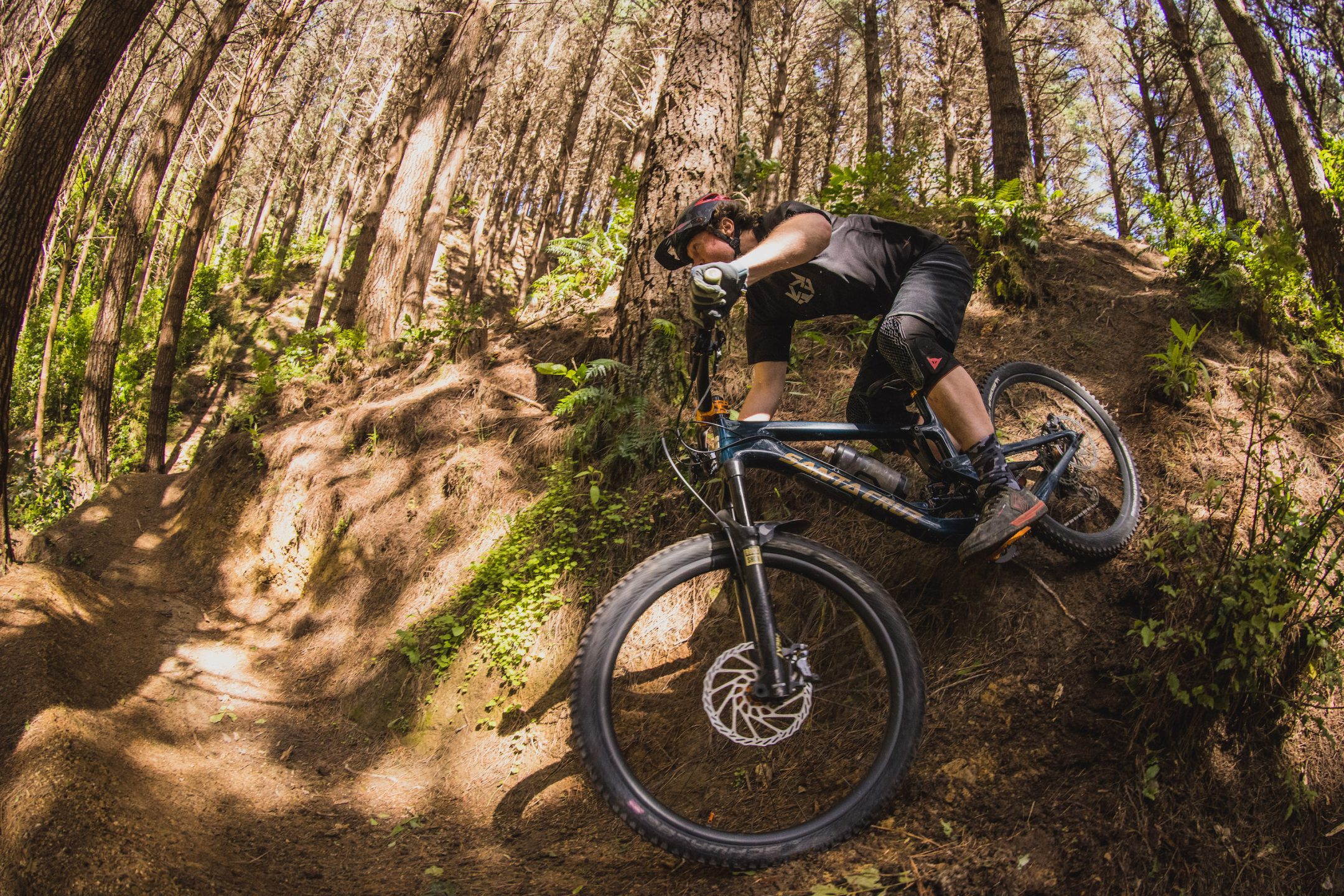
The second was a corners track called “2 Stroke” that flows down a parallel ridgeline to the jump track. It’s named after the clouds of two-stroke chainsaw smoke we created clearing a line to the bottom in one day (my arms never fully recovered).
The jump track needed a name, so Hamish came up with an Alice in Wonderland theme, with “Mad Hatter” for the larger doubles, and “Rabbit Hole” for the main line. We started to plan out if we could get more jumps further down the hill. Imagination started to take over. How we could make best use of the hill? What different kinds of jumps could we make? A plan naturally started to form in our heads.
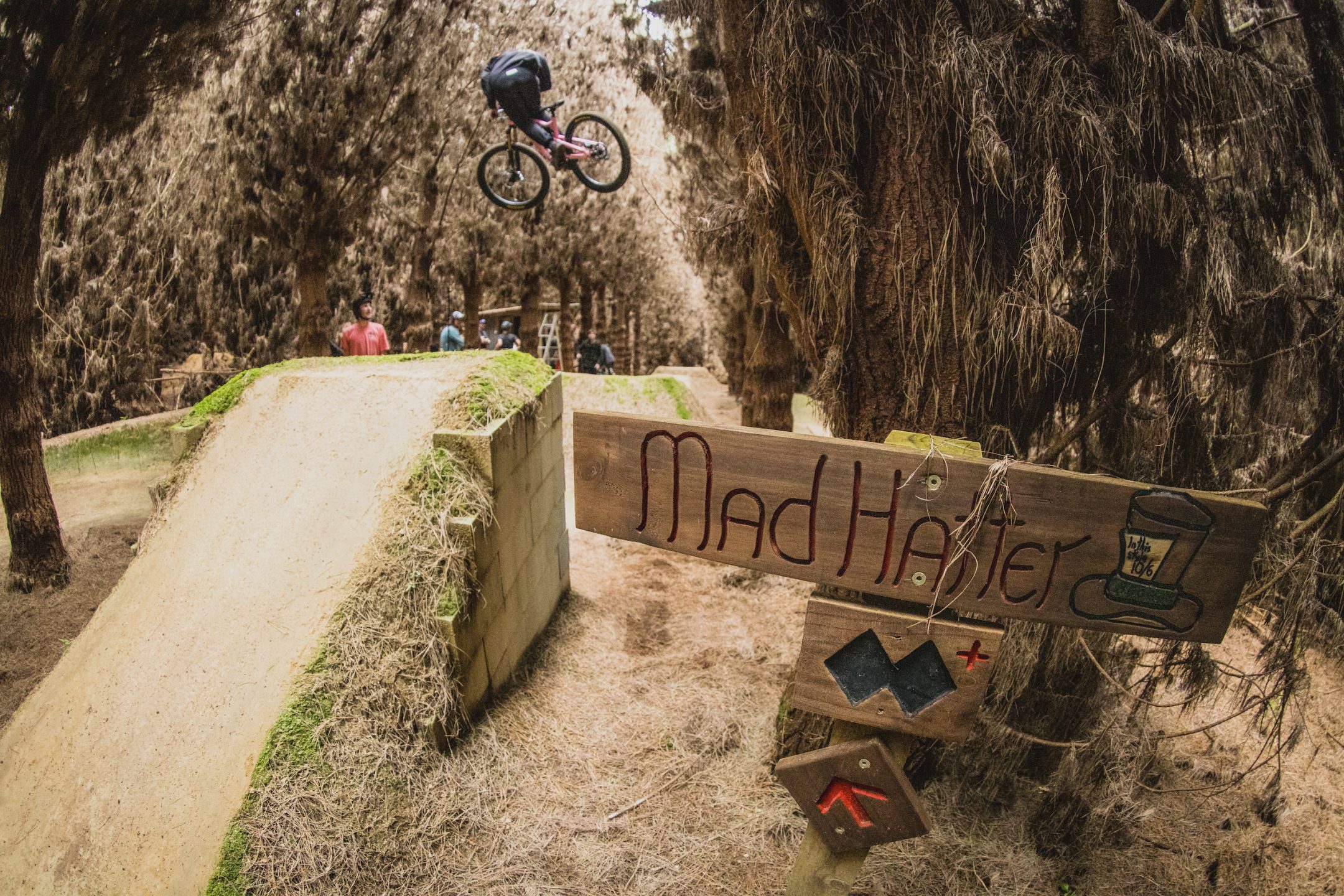
Originally, we never thought that Rabbit Hole could be a full track from the top to the bottom, as it was divided by a swampy valley. We built jumps down to the valley but struggled to come up with a decent option to cross it. The perfect solution would be a step-up, but the run-in into the valley was so steep we’d need to build a wooden-bridge. The amount of wood and effort to make this a reality seemed too far-fetched, so we parked the idea. Then I met Andrew “Jimmy” McFadden.
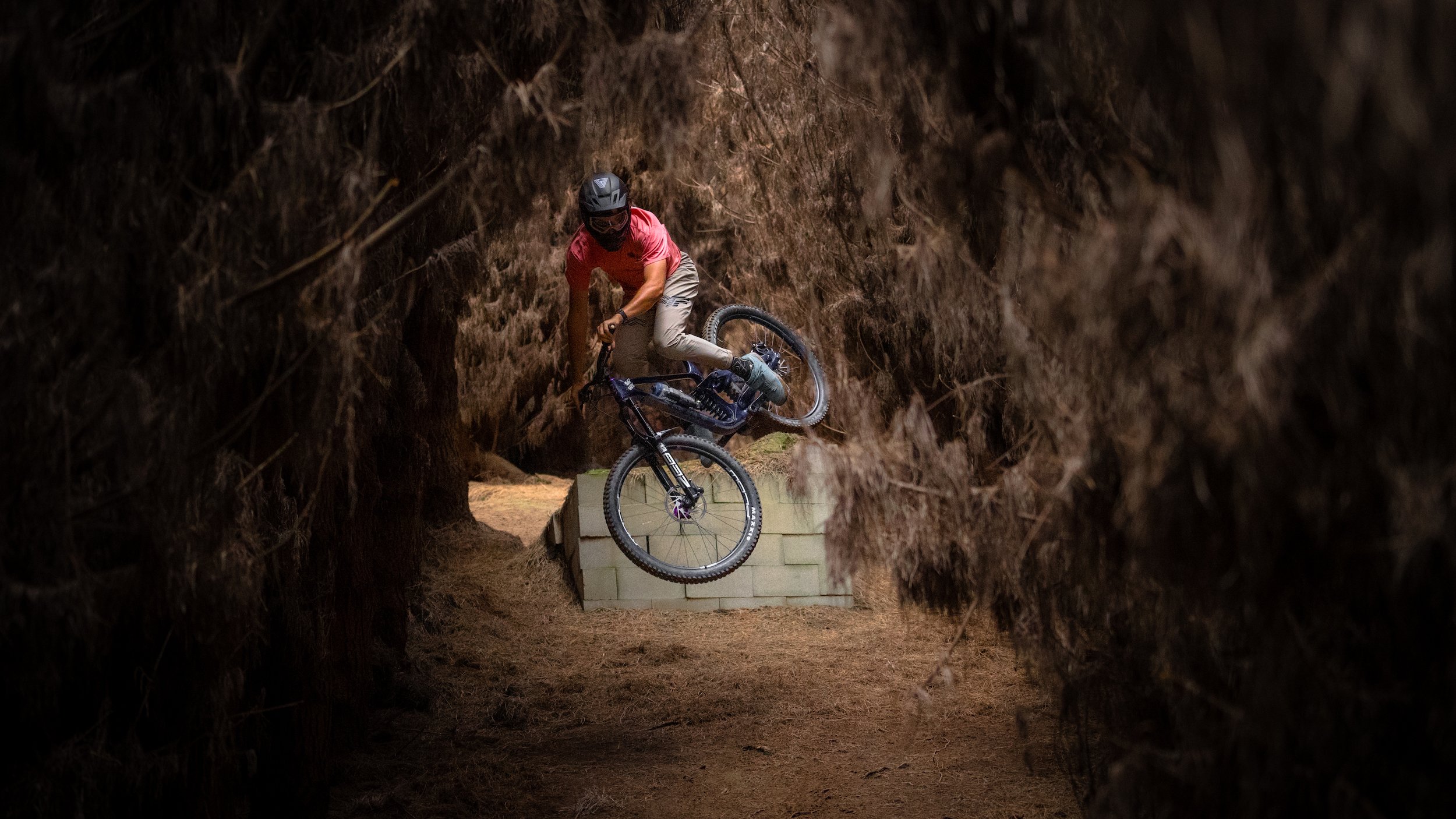
Jimmy wanted to make a jump he could pull a one-hander on, and he had access to a digger. It didn’t take long to put two and two together, and he gave up an entire weekend to build it for us – landing, take-off, land bridge, the lot. Then he popped a sweet one-hander off his creation and was on his way. We’re immensely grateful for that, as it made something possible that we wouldn’t have been able to complete with hand-power alone. With a bit of hand-shaping and an extension to the lip and landing, it’s now the fastest and biggest jump on The Farm. It’s usually covered up to protect it from the elements, but when it’s open you can session it for hours.
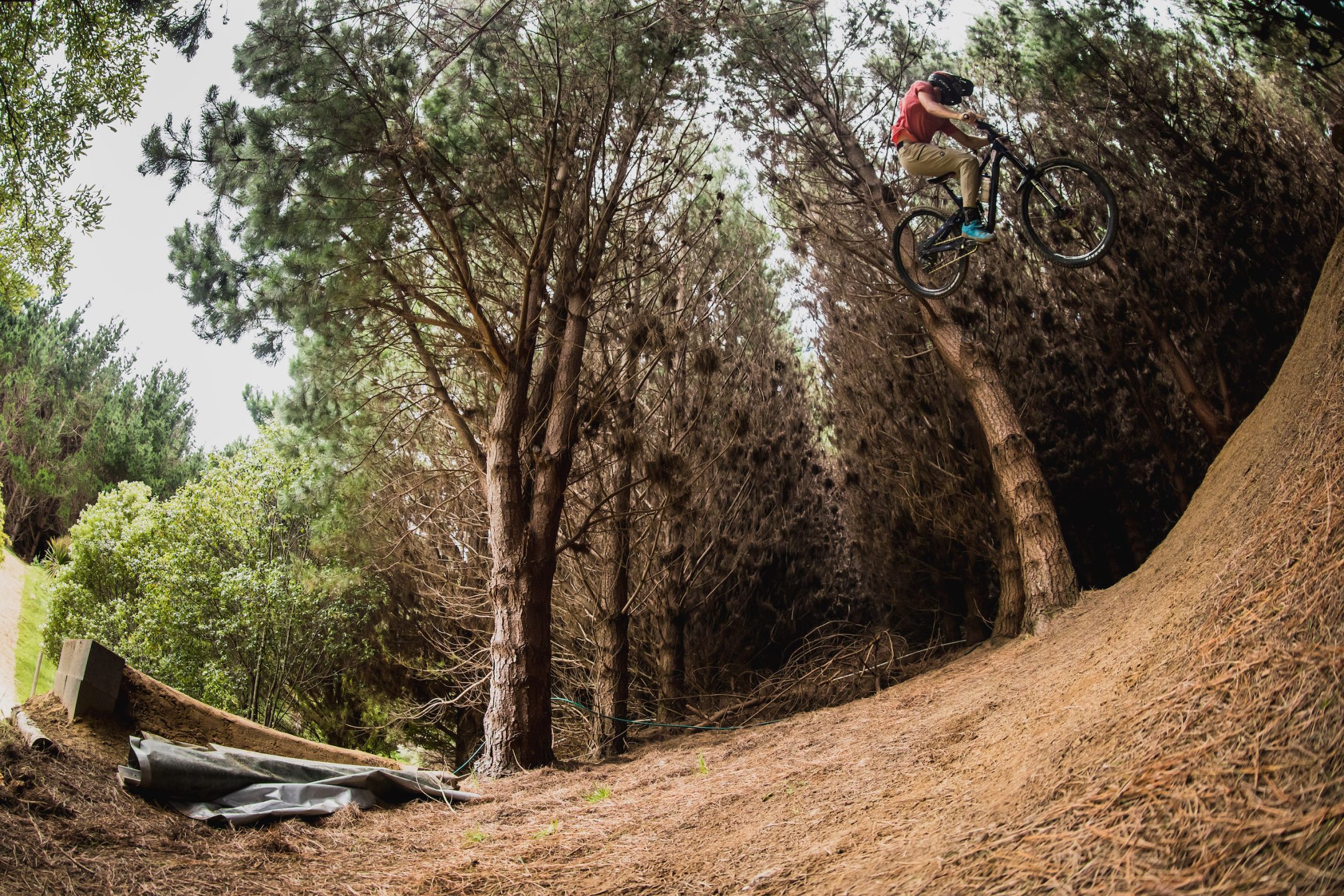
By the end of 2019, we had a top-to-bottom jump line — 26 jumps of all shapes and sizes. I’m not sure where they came from, as it was all a blur, but there were thousands of dig hours, and thousands of dollars of materials invested. Friends gave up their time to help make it all come together. Our friend Pavol put in a ton of work and helped push both the size of the features, and how much beer and coffee one could fit in before a dig.
The hard work, along with good yarns, was all worth it. The first day that we could ride laps of the jumps and back tracks really cemented that feeling. We finally had a place where we could invite groups of friends and not feel like the trails were “in progress”. We spent the early months of 2020 actually riding our own trails, and it was glorious. We’d then spend hours talking about ways to improve and tweak the trails over a post-ride beer. The list got bigger.
“The hard work, along with good yarns, was all worth it.”
The early 2020 Covid-19 lockdown coincided with a large amount of trail-building activity. We split up and worked on different parts of The Farm. I’m used to digging while chatting to Hamish, but I could only yell at him between ridgelines. This was the most bizarre time spent on the property, but we got a lot done.
By the end of lockdown, a new native trail, “Pig Peak”, had been created, and substantial upgrades were made to the other trails. 2 Stroke now had berms top to bottom, Rabbit Hole was resurfaced, and Loam Fest was extended.
By this point the trails were well established, which meant we could finally focus on riding. We’ve since made another back pine trail called “‘EarnYaTurns”, an aggressive corners trail with some fun, steep, natural features. The “small” line on Rabbit Hole also got a major revamp, turning them into dirt-jump style doubles. Hamish, being a pretty handy plumber, installed a full watering system the entire way down Rabbit Hole. Yes, I admit we might have a problem.
It hasn’t all been smooth sailing. Being next to a sheep farm with somewhat flexible fencing, our freshly built farm features get continual visits from sheep. Our lovely surfaces, usually in the lambing season, are pounced upon by tiny sheep with their shaggy mums in tow.
We’ve lost count of the amount of jumps we’ve had to resurface due to these feral freedom lovers. You’ll see most of our tracks are lined with trimmed pine branches acting as a sheep barrier. We’ve even gone as far as installing a fence alongside the step up. It’s pretty effective, but we still occasionally meet small flocks of sheep, usually at the worst possible moment.
Since the trail network has become well established, we’ve had a few hundred riders come through The Farm. Some people can ride everything first go, some look on in terror. We’re just stoked to share it with others, as there are some absolute rippers out there.
“It’s inspiring to see people progress their riding, so much so that we’ve started building lines and features to suit a wider range of skill levels.”
It’s inspiring to see people progress their riding, so much so that we’ve started building lines and features to suit a wider range of skill levels. Over the past few months we’ve made a new learner jump line next to Rabbit Hole, with volunteer help from locals and the Wellington Zerode crew. Since then we’ve had jump sessions with riders hitting all three lines, which was amazing to see.
For the future, there are many plans to keep developing and tweaking. There’s always work to do, keeping the trails swept, maintained, changed and improved. An uphill track and a rebuild of some of the jumps are next on the list.
Trail-building is iterative, and spending time perfecting a section of trail gives you immense satisfaction when you next ride it. Building trails is hard work, but it’s also highly rewarding. It makes you truly appreciate the work that goes into the many incredible trails we have available to us today.
The Farm is a place for progression without pressure, and built for fun. There aren’t too many trail networks like this in the lower North Island, and we feel extremely lucky to have it on our doorstep. To all the people who have given us a hand to throw dirt about, thank you!