
THE ISLAND
Into the unknown of Vancouver Island
Words
Angus McRobie
Images
Angus McRobie and Hannah McWhannell
A problem shared is a problem halved, or so they say. In our case, it was a problem quartered, and only if seen through a certain lens. The problem at hand was navigating a previously undocumented, uncharted bikepacking adventure from the north to south of British Columbia’s coastal gem, Vancouver Island.
Meeting in Revelstoke the previous winter season, our quartet consisted of two Canadians; Chace Schroeder and Geoff Hawkswell, plus myself (Angus), and girlfriend Hannah McWhannel—a couple of curious Kiwis along for the ride. The three of us guys had lived in BC’s interior for summer. Hannah, having returned to New Zealand post-winter, jumped at the last-minute opportunity to return for the trip.
A bunch of mountain bikers, we had little in the way of bikepacking experience. Chace and Geoff done a couple of trips, including an early summer recon loop around a neighbouring mountain range. It was Hannah’s first time with gravel beneath her tyres and bags on her bike. It was all new, and new meant exciting. What we lacked in familiarity we made up for in enthusiasm and the determination to just have a bloody good time.
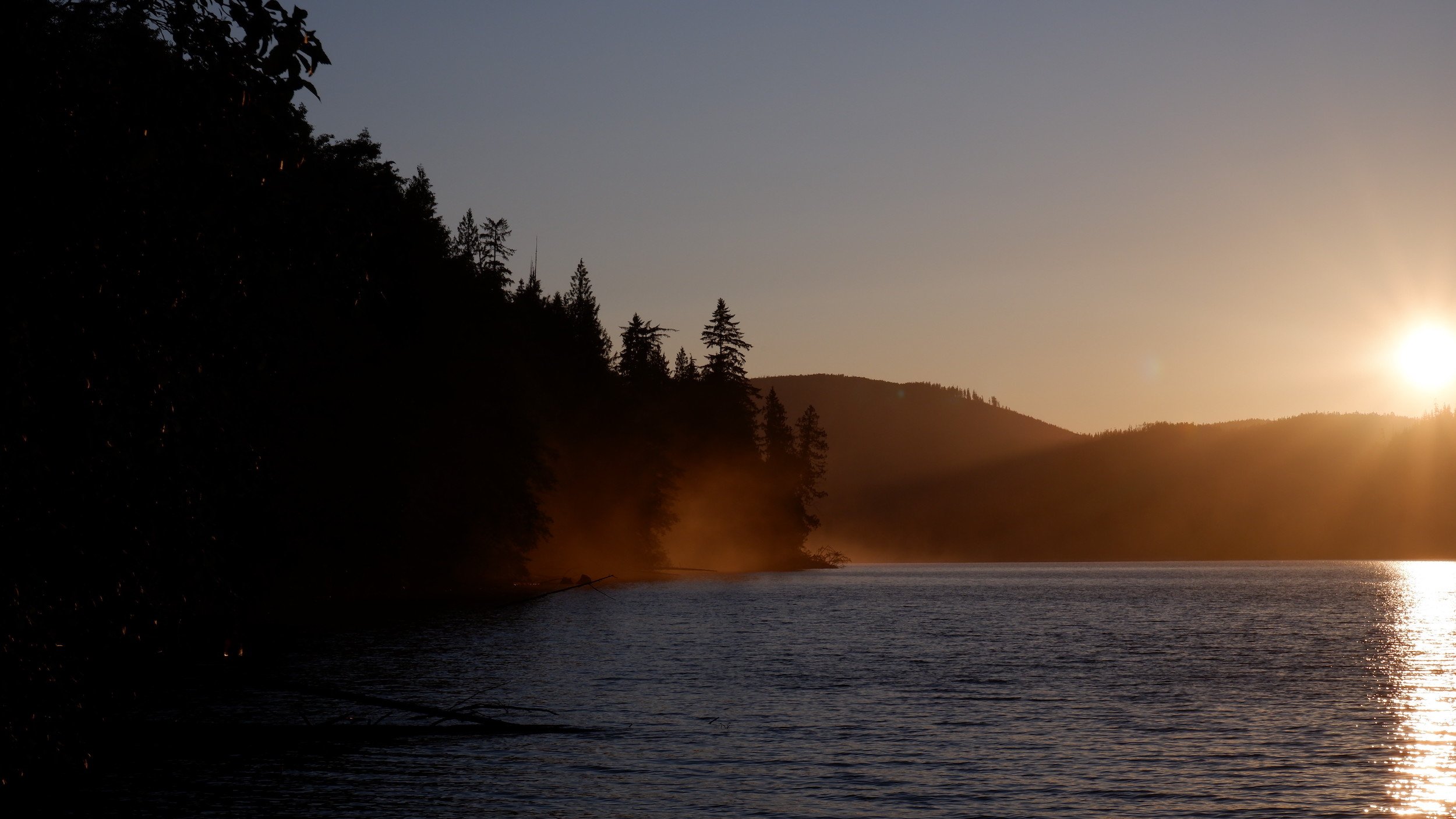
Locally referred to as “The Island”, outsiders would be forgiven for imagining a small, remote islet. As anyone who’s been to Canada knows, nothing here is small; The Island stretches 460km from top to bottom and contains 31,000 square kilometres of rugged mountains, ancient forests, and fierce coastlines. Home to an abundance of British Columbia’s wildlife, it also held the possibility of surprise around every corner, including bears and wolves, whales, sea otters, snakes and bats. And that’s not all, Vancouver Island boasts North America’s highest concentration of my favourite lowland-forest-lurking predator—the cougar. It’s fair to say there would be more than riding on our minds when we set off each morning.
Other than the route being one way and requiring rental vehicles that could transport bikes and enough gear for a week off the grid, it also included several water taxis, days without resupply options, and enough gravel to sink a ship.
Most bikepackers opt for the logistically easier Tree to Sea Loop around the northern end of the island. We were seeking something different—we had our minds set on the north to south passage.
Desiring to truly experience the region’s raw beauty, the trip’s aim was to stay as remote as possible, as far west away from Highway 19, The Island’s main transport artery. This was Chace’s goal when he pulled the route together several months prior. However, due to a lack of development on much of the West Coast we would need to make a number of lateral traverses, increasing the distance to about 800km with nearly 10,000m of climbing.
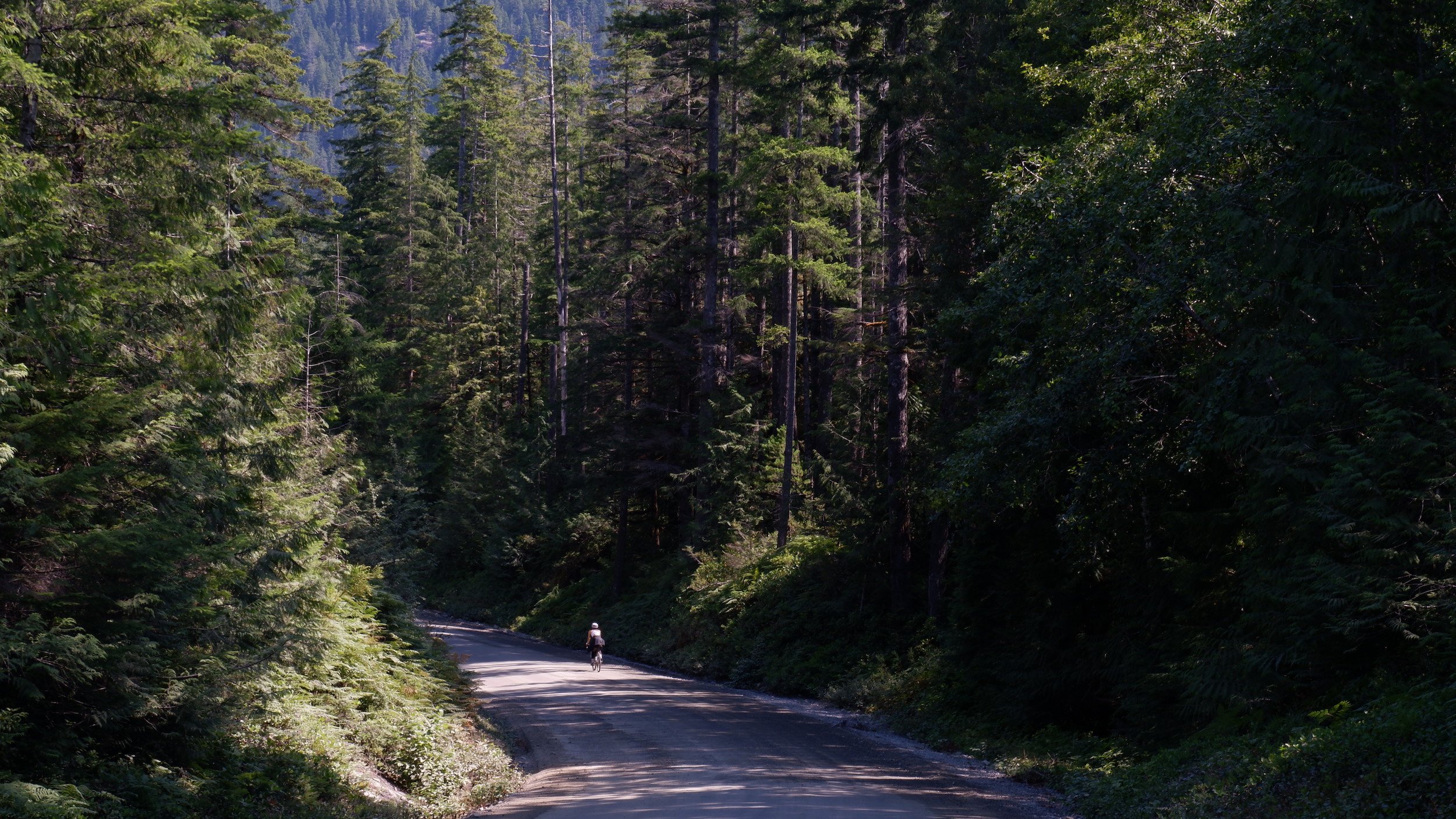
Forestry service roads made up the core of our route. Developed and maintained by private foresters, these ribbons of gravel pierce deep into The Island’s mountainous backcountry. A tool for access, they are notorious for their severe variations in condition and logging activity. While we could hope for the best, warnings about The Island’s highly active forestry industry and washboard gravel meant we were prepared for the worst.
With the planning behind us, the date soon arrived, and we rolled the door shut on our one way U-Haul and began portage from Victoria to Port Hardy. Anything missed in preparation was now a bridge to cross later.
Was this the plan?
From the get go, we were on the back foot. The transport north had taken considerably longer than expected, and it was 6.30pm before we started pedalling. An important part of the route lay ahead, a 75km stretch from Port Hardy to San Josef Bay—our northernmost point. Having aimed to saddle up no later than 3.00pm, we were well behind schedule.
With only three hours of daylight remaining and a lot of ground to cover, we set off. Feelings of curiosity and excitement were mingled with nerves and uncertainty—things were already looking dicey.
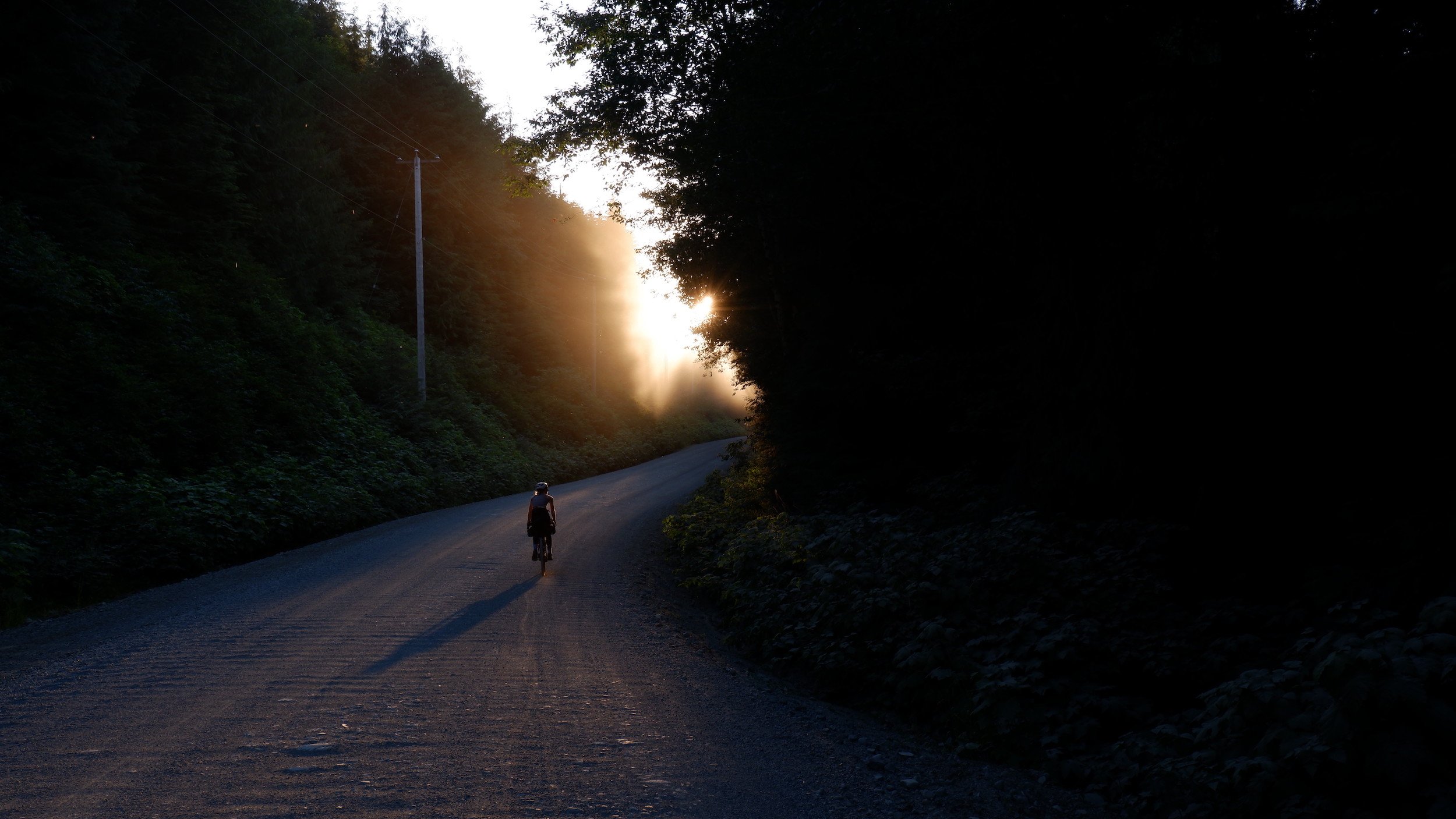
Speedy tarmac quickly gave way to moon-dust gravel as we made our way out of town. Our shadows began to grow as the late evening sun began dropping below the tree line, firing the dust-saturated air into an orange haze. Our hopes of making it to San Josef Bay were sinking with the setting sun and the fantasy of a blissful cycle tour was beginning to fade into a new reality.
Headlights were pulled from our packs, and we continued pedalling. We decided on a new destination, Holberg, 20km shy of our initial target. We made it after a dark pedal and by midnight we were crawling into sleeping bags, each hoping for smoother rolling tomorrow.
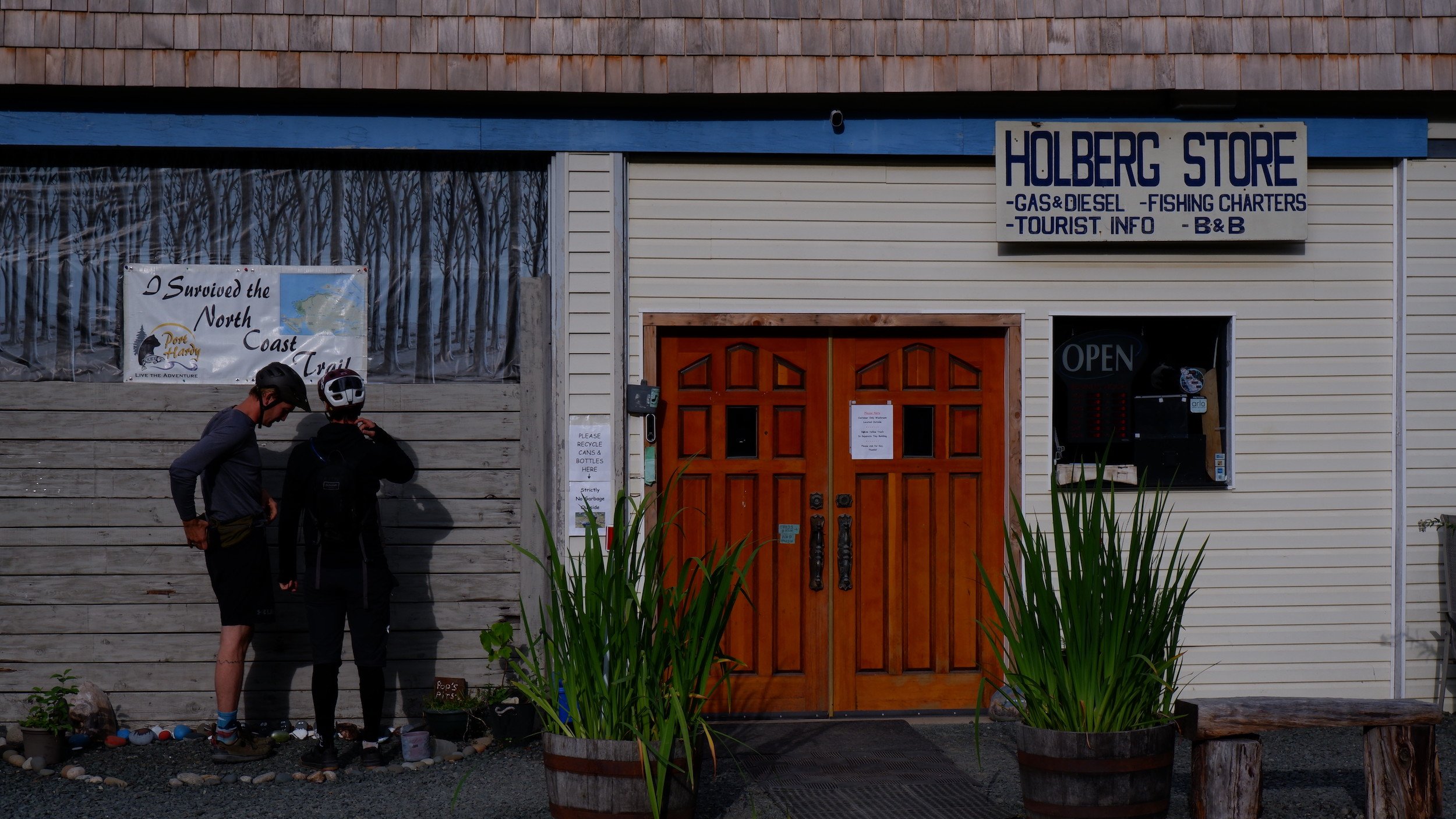
Rubbing weary eyes the following morning, we deliberated on whether to turn south or continue north to San Josef Bay, which was an extra 40km gravel ride out and back. Not wanting to pass on ambition this early, we chose the latter.
The funny thing is, when we got there, I’m not sure it was worth it. Perhaps it was the swathe of other travellers who had made their way to the destination less strenuously, or perhaps it was the fact we had added distance to an already large day and didn’t have time to truly enjoy the place’s natural beauty.
We fired up the Jet Boil, mixed oatmeal, poured instant coffee, sat down on a washed-up log, admired the scenery for twenty minutes, hopped back on our bikes, and headed back the way we came. At least it was all downhill from here…
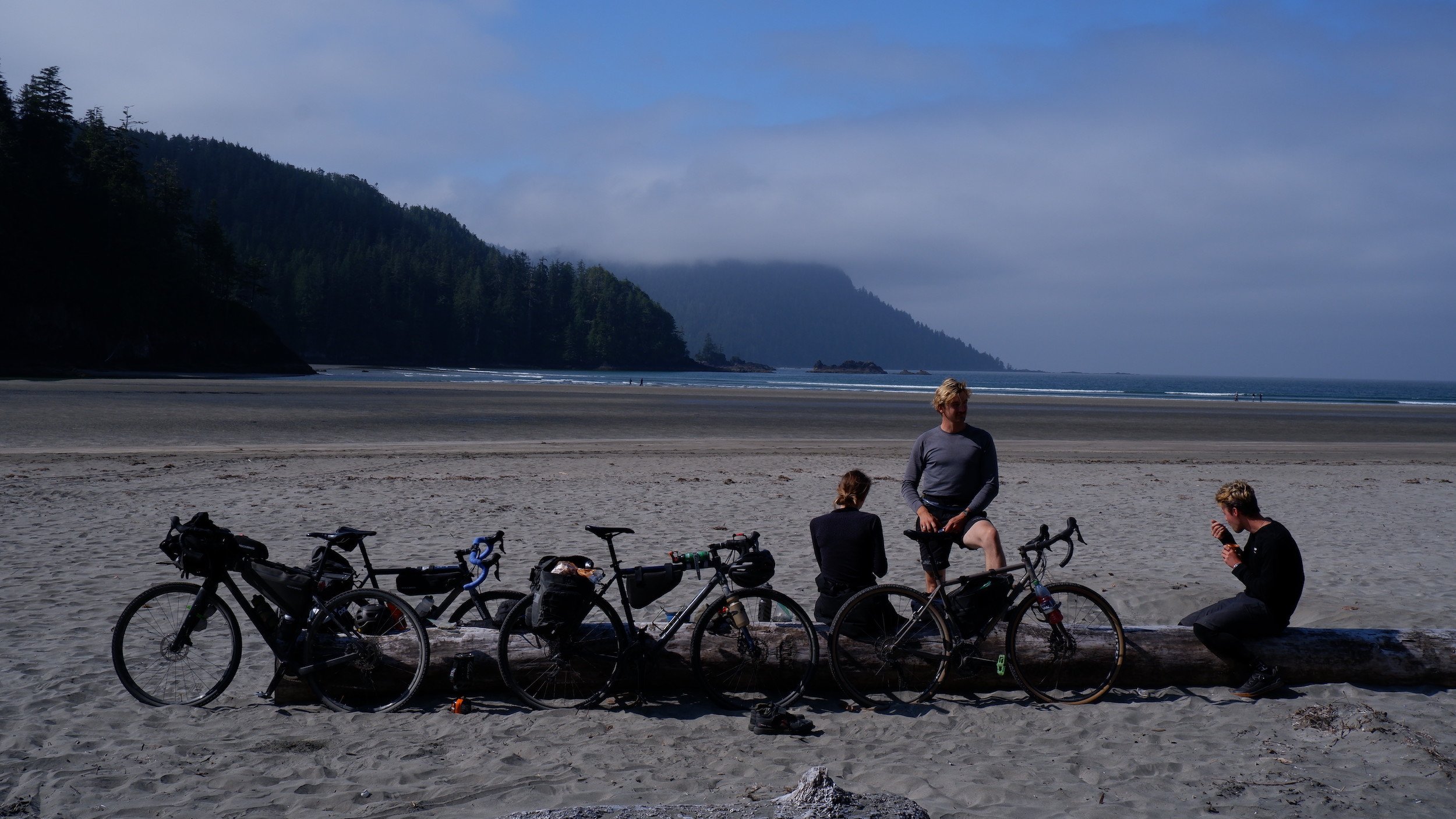
Or so we thought—what followed was a lot of silent suffering. The seemingly never-ending forestry roads saw us engulfed in prehistoric undergrowth. Minutes turned to hours, with the only notion of progression coming through the declining distance markers: 49 DOWN, 48 DOWN, 47 DOWN…
Effectively a barrier between the Pacific Ocean and Vancouver, The Island is a notoriously wet place. However, we were there in the height of a dry period. Dusty roads ran past small creeks scorched dry by the sun and the unexpected lack of water sources meant significant stretches without refills.
It was late in the day and Hannah was battling a lower-leg strain, splitting our four into two over the last 30km. Hoping words of support would go a mile, I was beginning to curse myself for throwing her into the deep end. Knowing the injury had the potential to end her trip, we could only remain optimistic and push on.
Parched and exhausted after 12 hours in the saddle, we rolled into camp at Marble River, again short of our planned destination, Port Alice. The gruelling 120km day had been ninety five per cent gravel with a mix of punchy steep climbs, long undulations, and little respite from the hot sun. It felt as if we had been travelling through a parallel universe, an occasional glimpse of the ocean the only reminder of where we were.
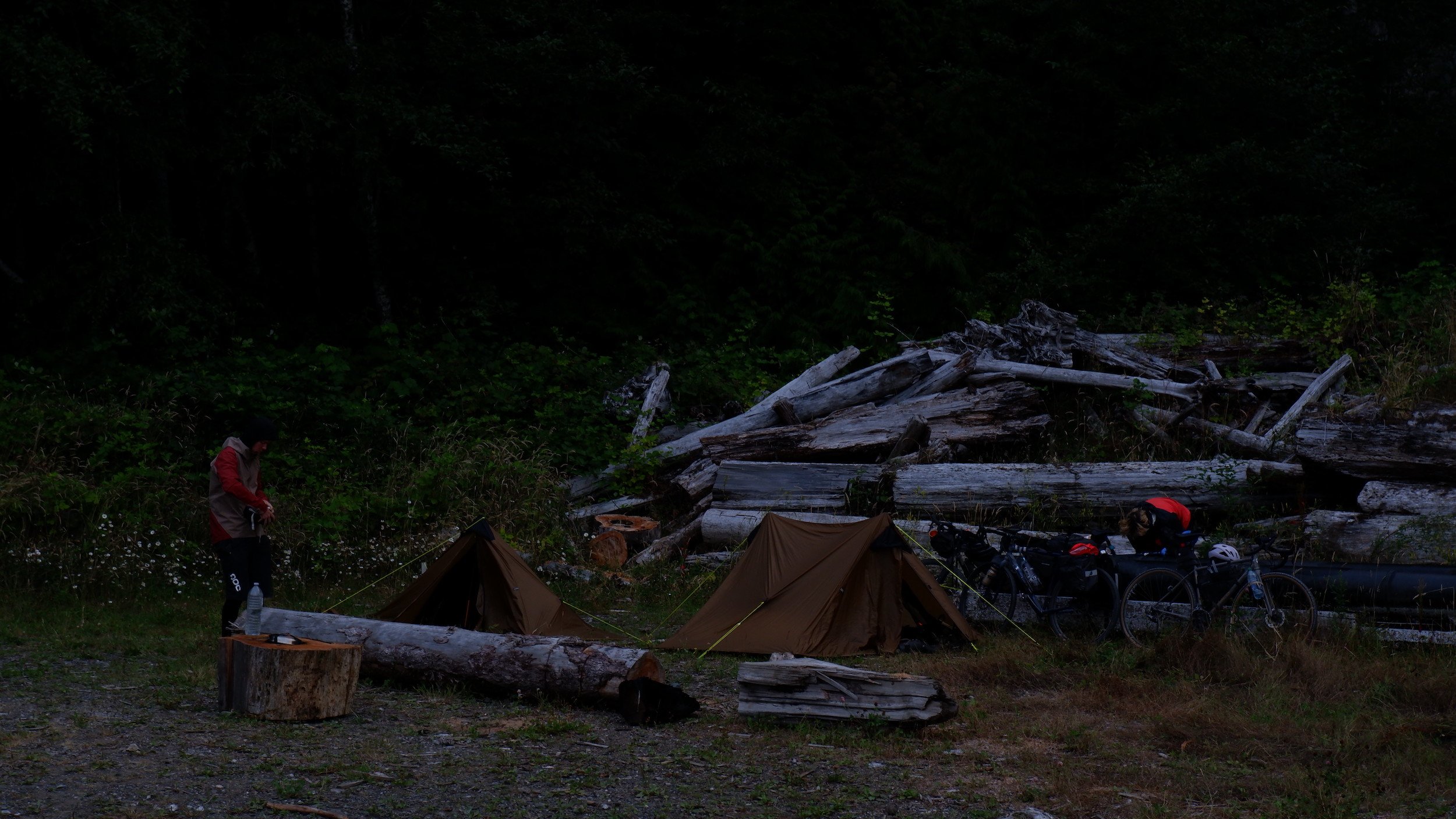
Vancouver Island – she giveth, she taketh
The trip was still on a knife edge when we rose the next day. Opposed to heading south down the coast to Zeballos, we decided to re-route through Port McNeill. Slightly less direct, it ensured we passed a resupply and a medical centre, should we need it.
Deciding to hit the service station first, Chace went straight in for a can of Dr Pepper. It was like a switch had been flicked—the man was revitalised and ready to keep rolling. You could say the can of fizz was just what the doctor ordered. A slight adjustment to Hannah’s seat position and a strong dose of determination was alleviating the pain in her leg.
We had left the rolling, rainforested hills of The Island’s north, and were making our way to the more alpine centre with long, sweeping views across wetlands towards dramatic volcanic formations cloaked in greenery. Sunlight lanced through the dense forest canopy, illuminating areas of its mossy floor. We passed by emerald blue, crystal clear rivers that flowed through deep gorges. With its knack for providing distraction, nature’s charm was enough to get us through the physical pain.
“With its knack for providing distraction, nature’s charm was enough to get us through the physical pain.”
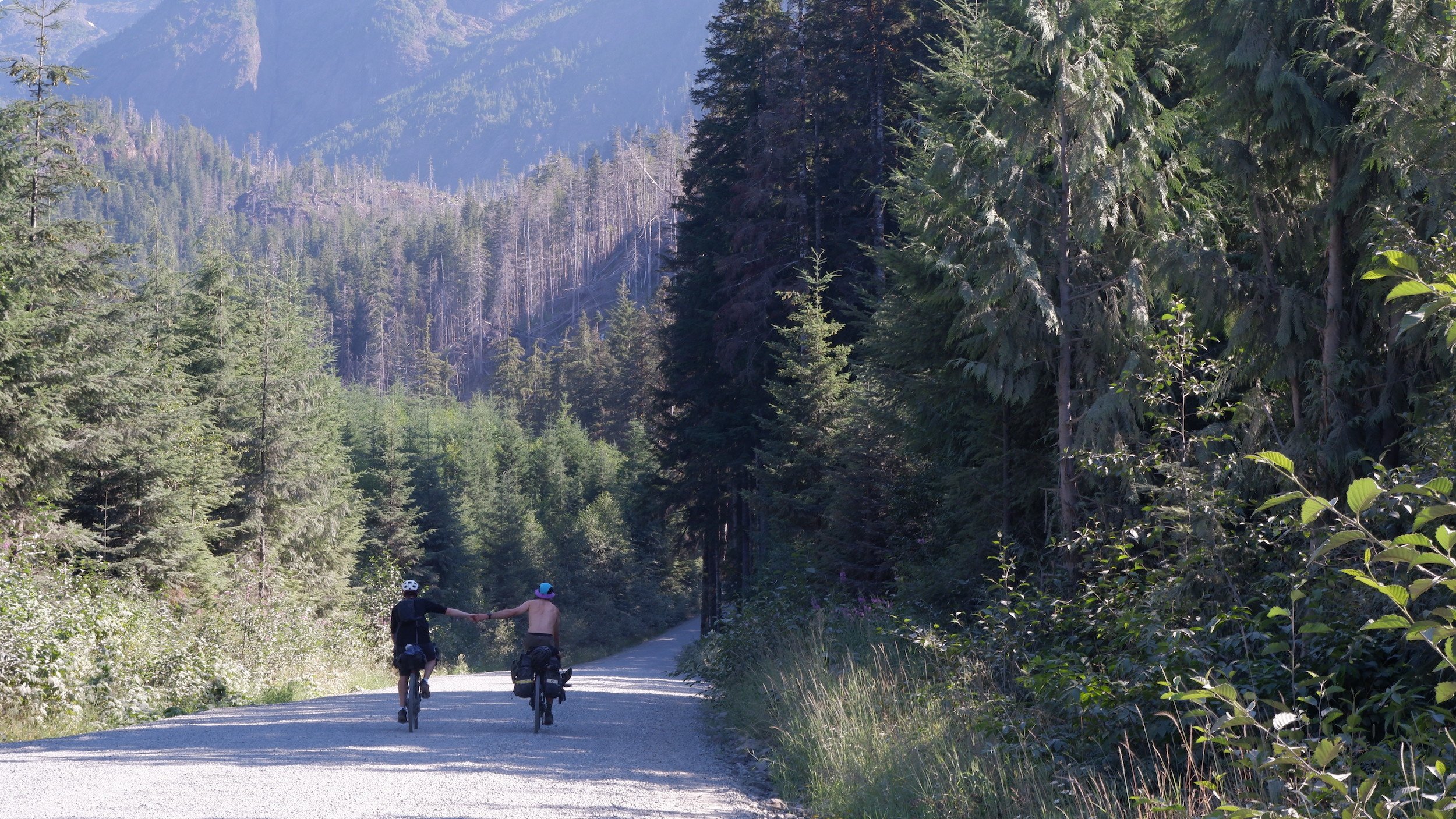
We soon found calm in Zeballos. A remote fishing town, Zeballos is the West Coast’s self-proclaimed “Golden Gate”. Slightly frustrated that we’d missed the general store’s closure by ten minutes, spirits were soon lifted when we found the local motel had hot food on offer. Even better, it was served with a big smile by Mexican chef, Oliver. Geoff said it was the best burger he’s ever eaten. I’m not sure whether that was a testament to Oliver’s burger recipe or fatigue from the day just passed. Either way, it hit the spot.
Nestled in a mountainous valley, Zeballos is accessible via the 50km one-way forestry road we had just ridden, or by boat through an ocean inlet. Thankfully, we didn’t need to head back the other way, and caught the water taxi with our new mate, Dan. As well as running the boat service, Dan seemed to have a hand in everything in the town, short of being the mayor.
The looming mountains were hidden by fog as we jetted out of the fjord. We spotted sea otters, sea lions and a black bear having breakfast on the shore. This place was starting to put on a show, and we were all for it.
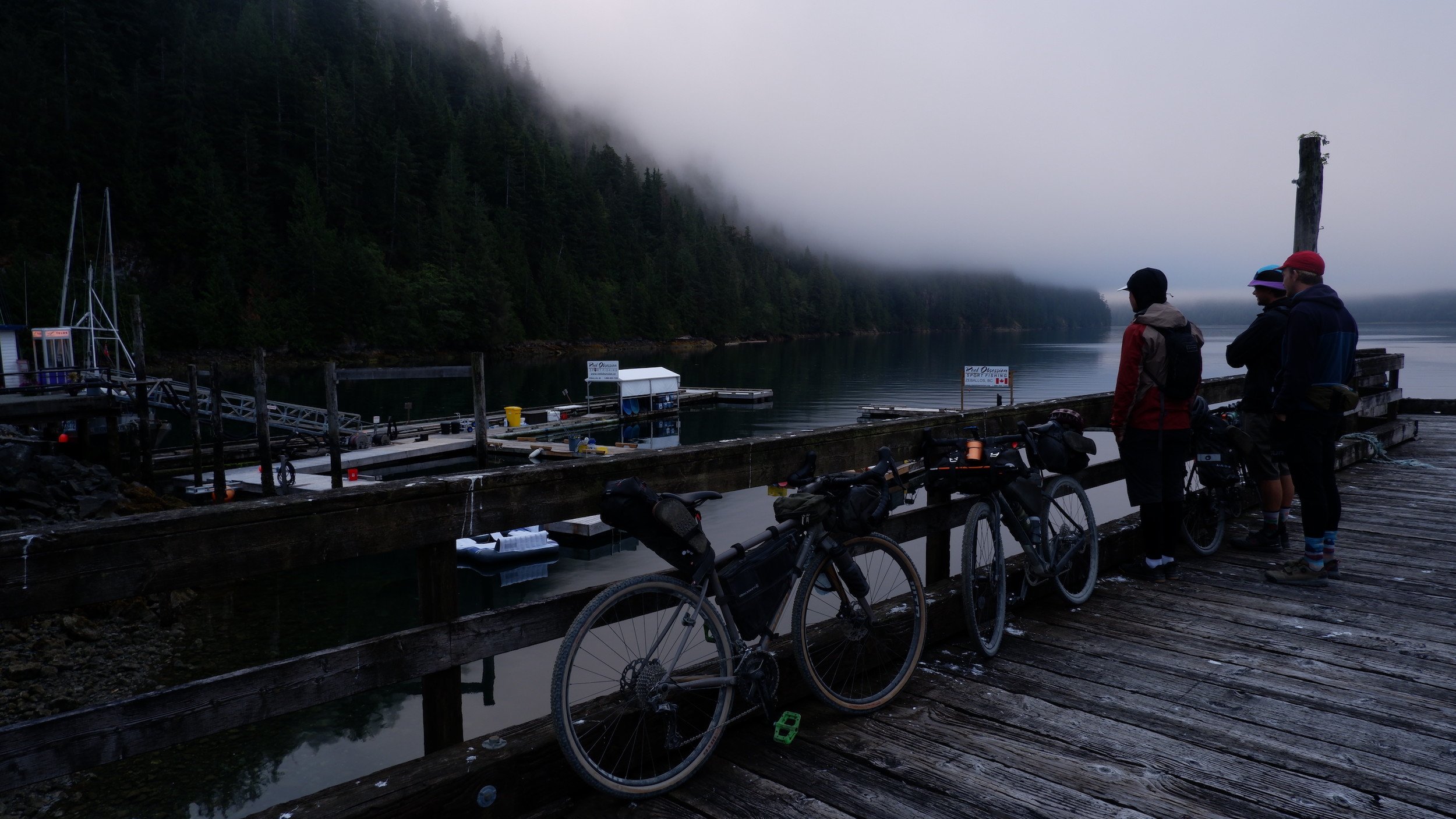
Emerging and observing
Nearing the halfway point, we reached one of our most memorable camping spots; Rainbow Point. Sitting on the beach, we gazed across the lake to the glaciated mountains of Strathcona National Park. An aspiring guide himself, Geoff was describing a lesson a mentor had once given him: No matter the length of a trip, the first two or three days are always the most difficult, he said. From that stage onwards, you are just in it. It doesn’t matter if the mission is nine, or ninety days, the experience becomes normalised, and days pass by with more ease.
Geoff’s lesson rang true. We had found our rhythm, and while the day had been physically the hardest so far, it had also been the most magical. We had emerged from the ruins of day one and two into a state of bliss that subsumed suffering.
“We had emerged from the ruins of day one and two into a state of bliss that subsumed suffering.”
We were joined in Strathcona that night by Martin, a local islander and friend of Geoff, who would join us for the following day’s ride through to his hometown of Courtenay. As an outsider to the trip thus far, it was easy for him to notice that several gruelling days in a row were catching up with us.
We continued our traverse from the West Coast towards Courtenay. Thankfully, the day was fairly relaxed, predominantly tarmac for the first time in a while.
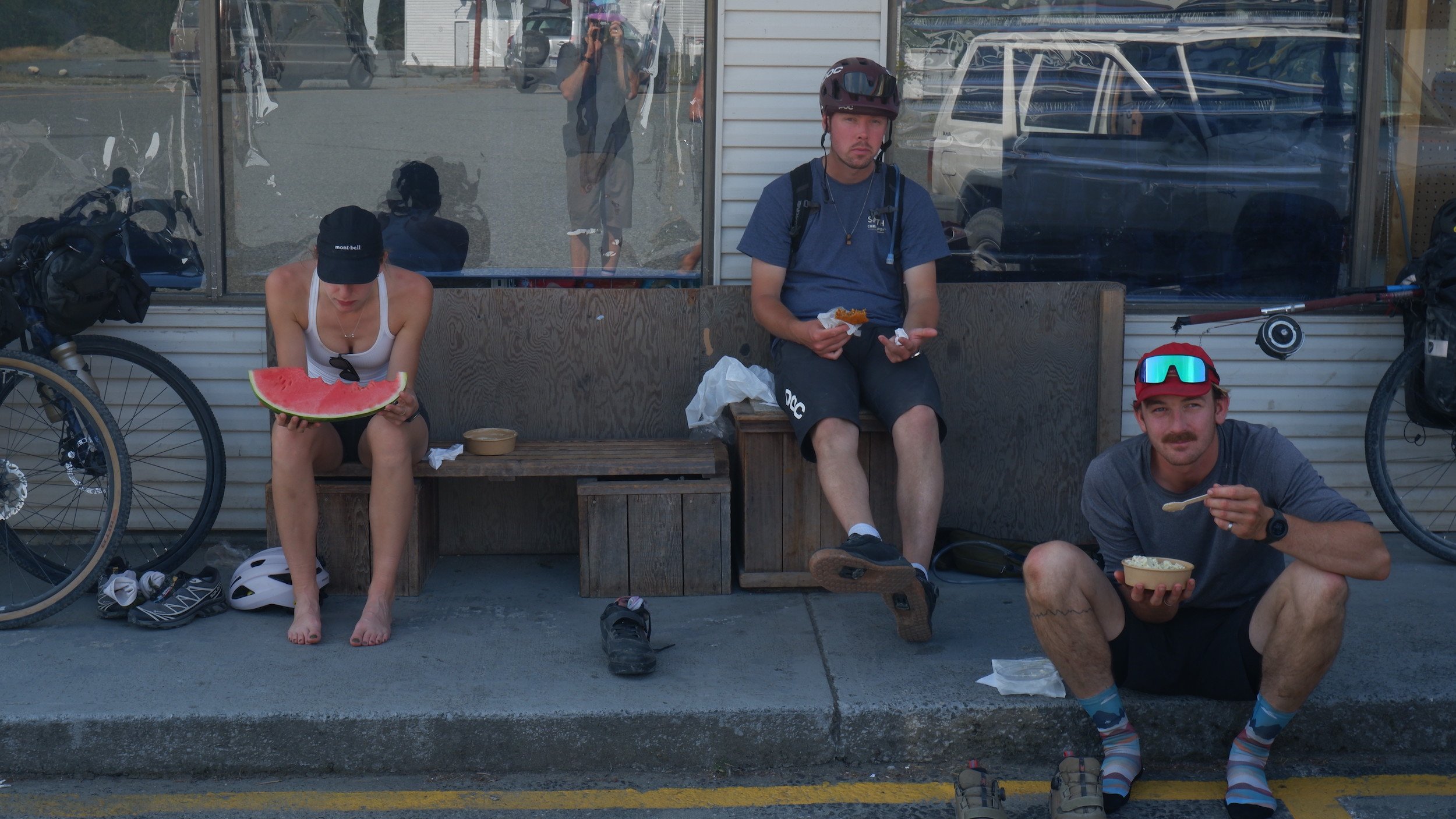
Things were getting fairly gassy after four days of dehydrated meals and, with the prospect of another four nights with only a sheet of nylon between us and the ground, we couldn’t turn down Martin’s offer of refuge in his backyard. It was a welcome relief and a funny precursor to the rest of the trip’s struggle to find a decent camping spot.
Our next leg was to Port Alberni. The route choice was between a longer tarmac ride or the backroads behind Comox Lake, an active logging area. We’d heard there was a roadblock preventing traffic on the latter, but this direction would make our lives a lot easier, so off we went.
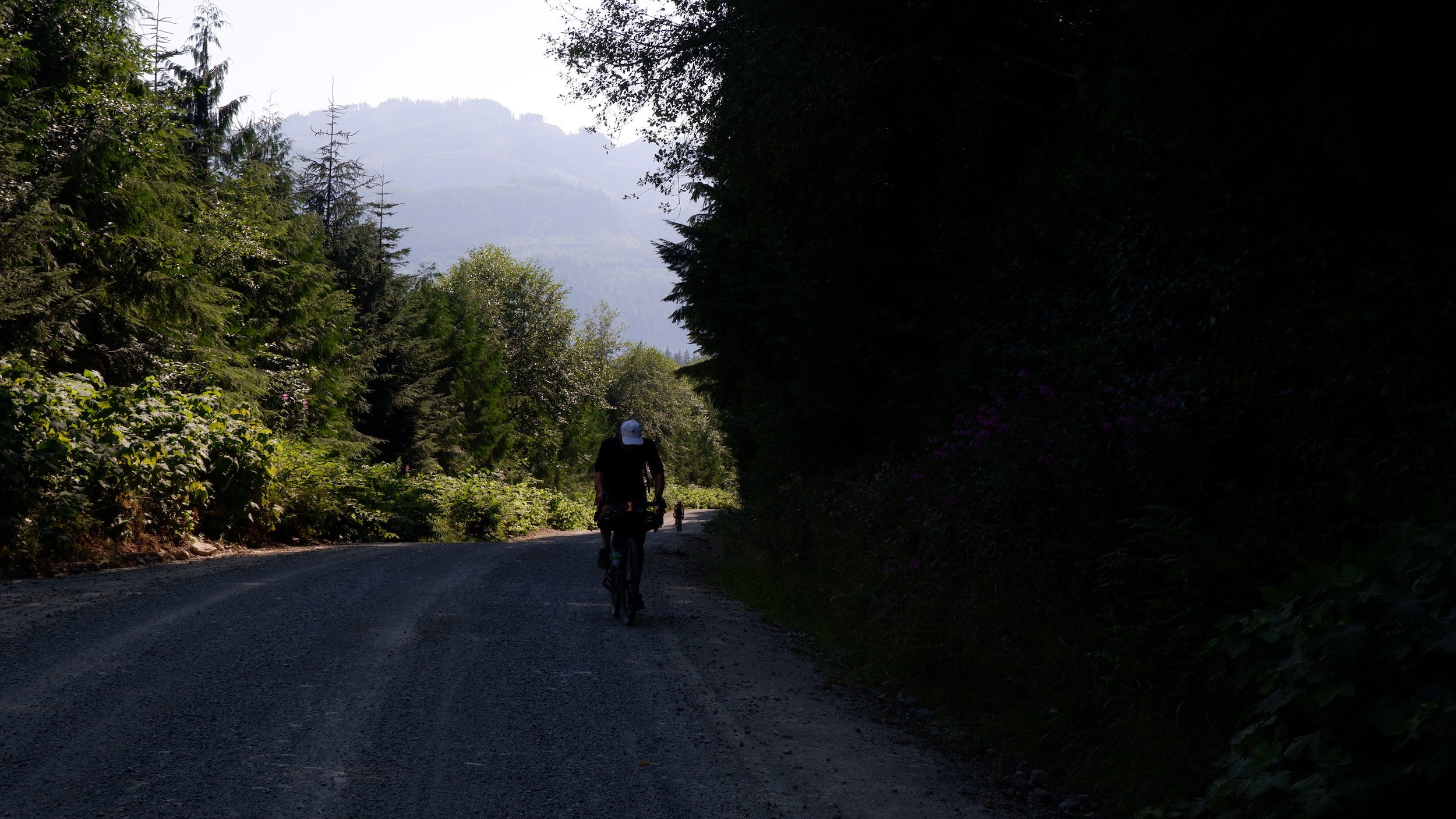
We dodged the roadblock via an unused hiking track and, after ninety minutes of hike-a-bike, we successfully made it back to the route. Unfortunately, we were soon met with the reason for the roadblock—an unrelenting barrage of logging trucks every twenty minutes. A noisy billow of dust from every passing truck forced us into the roadside ditch. Progress was slow and our moving time for the day was pushed out significantly. I was once told that it’s never worth it to go beyond the red tape when travelling, a lesson now learnt through hard experience.
“I was once told that it’s never worth it to go beyond the red tape when travelling, a lesson now learnt through hard experience.”
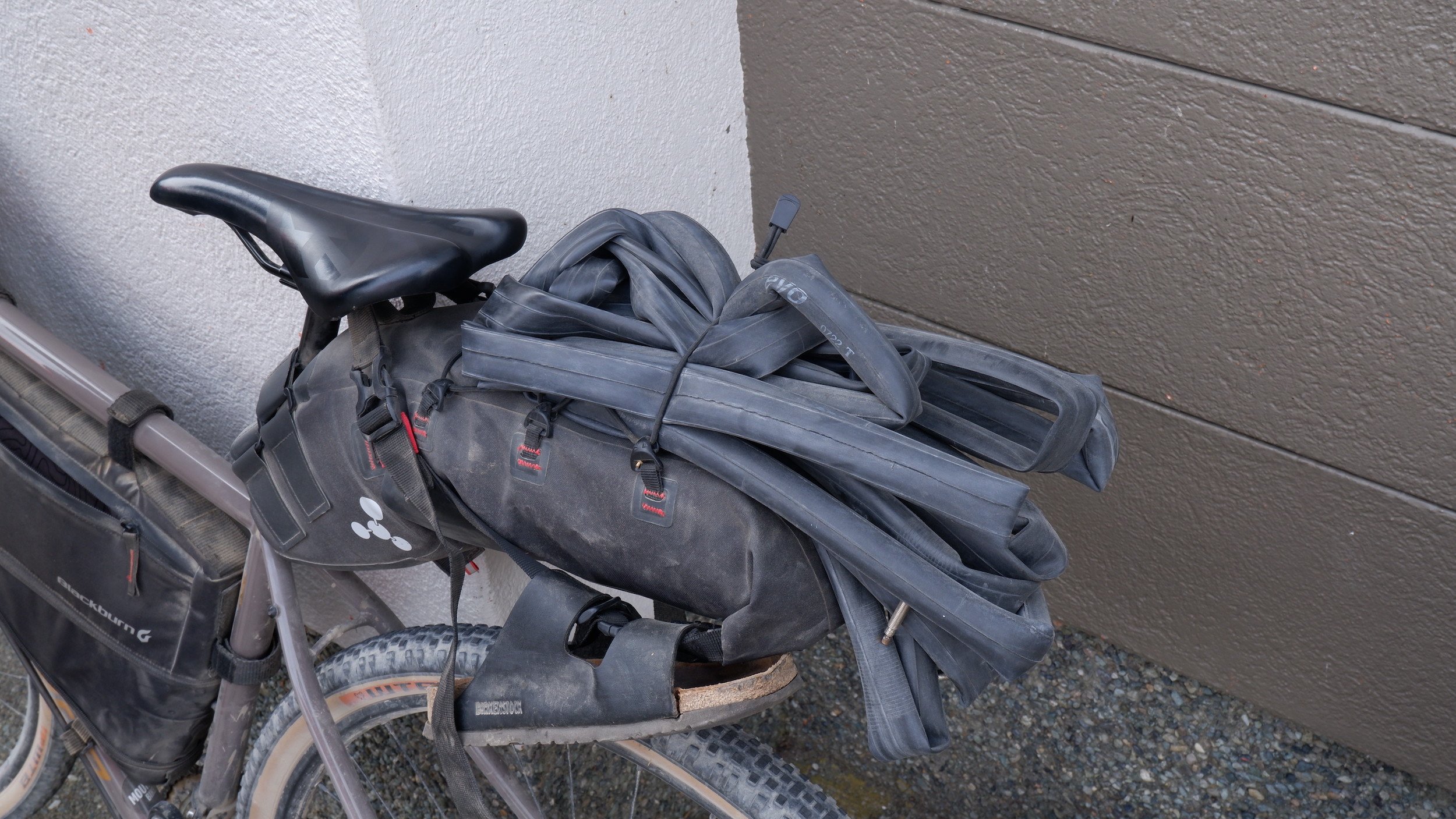
Things had been relatively smooth sailing with our bikes up that point, bar an overnight flat tyre and an issue with Geoff’s pannier. Perhaps ducking the red tape had triggered a karmic imbalance. I had been a fairly strong advocate for taking the backroad to Port Alberni and from that moment onwards I began flatting at least twice a day. We’d carried seven tubes and a repair kit between us—plenty enough, we thought.
On our final day, with absolutely no idea what was causing my punctures, and no bike shop in sight, I popped our last inner tube. Prepared to wave the others goodbye and figure out my own transport for the final stretch into Victoria, we were luckily rescued by a passing group of Victorians who gave us one of their spare tubes, which miraculously carried my bike all the way to the end.
Completed
The Island’s mass was now behind us and we sat down and rested our bodies, this time without the thought of going again the next day—you beauty.
In this moment, we collectively realised that when doing something reasonably long and challenging, you spend a lot of time thinking about the satisfaction of reaching the end. But it’s not only about completing the mission—it’s the small moments that are most memorable. For the majority of the time, your mind is submerged in the experience, entering some form of prolonged flow-state with each day spent pedalling along, taking everything in, but also nothing at all.
For us, this was never just a bike trip, it was always about people—the four of us and those we connected with along the way, in different moments, short and long. Sure, cycling was how we traversed The Island, but bicycles were also how we connected, our pedal-powered momentum a means for making precious moments together.