

RAD RIGS
Ant Green’s bike formerly known as Supernaut
Words and Images Ant Green
This is my one-off frame, designed and built by me in 2020. The design took about a year, and the build took two months of evenings and weekends. The frame cost about $3600 in 2020, not including my time. It weighs 17.5 kg with Cush. It goes hard.
I wanted to make bikes ever since I was a kid in the 90s. There was an amazing Diamondback ad in Mountain Bike Action featuring a silhouette of their bike and a bunch of beautiful handwritten maths. The tagline read “now you can build one”, or something like that. It was total nonsense, of course, but this ad is probably what pointed me towards engineering.
Fastforward many years, I finally started building bikes in about 2015. They’ve all been quite different and only for personal use. This bike has been carefully designed for maximum stability and grip on questionable trails.

The numbers: 29-inch front wheel, 180mm travel fork; 27.5- or 29inch rear wheel, 170mm travel; reach, 490mm; head tube angle, 61 degrees; chain stay, 435mm static; seat tube, 400mm; seat tube angle, 78 degrees; bottom bracket height, 340mm.
The material is primarily steel—Reynolds 853, with a bit of straight gauge 651 and chromoly. The links and ancillary components are all 7075-T6 aluminium.
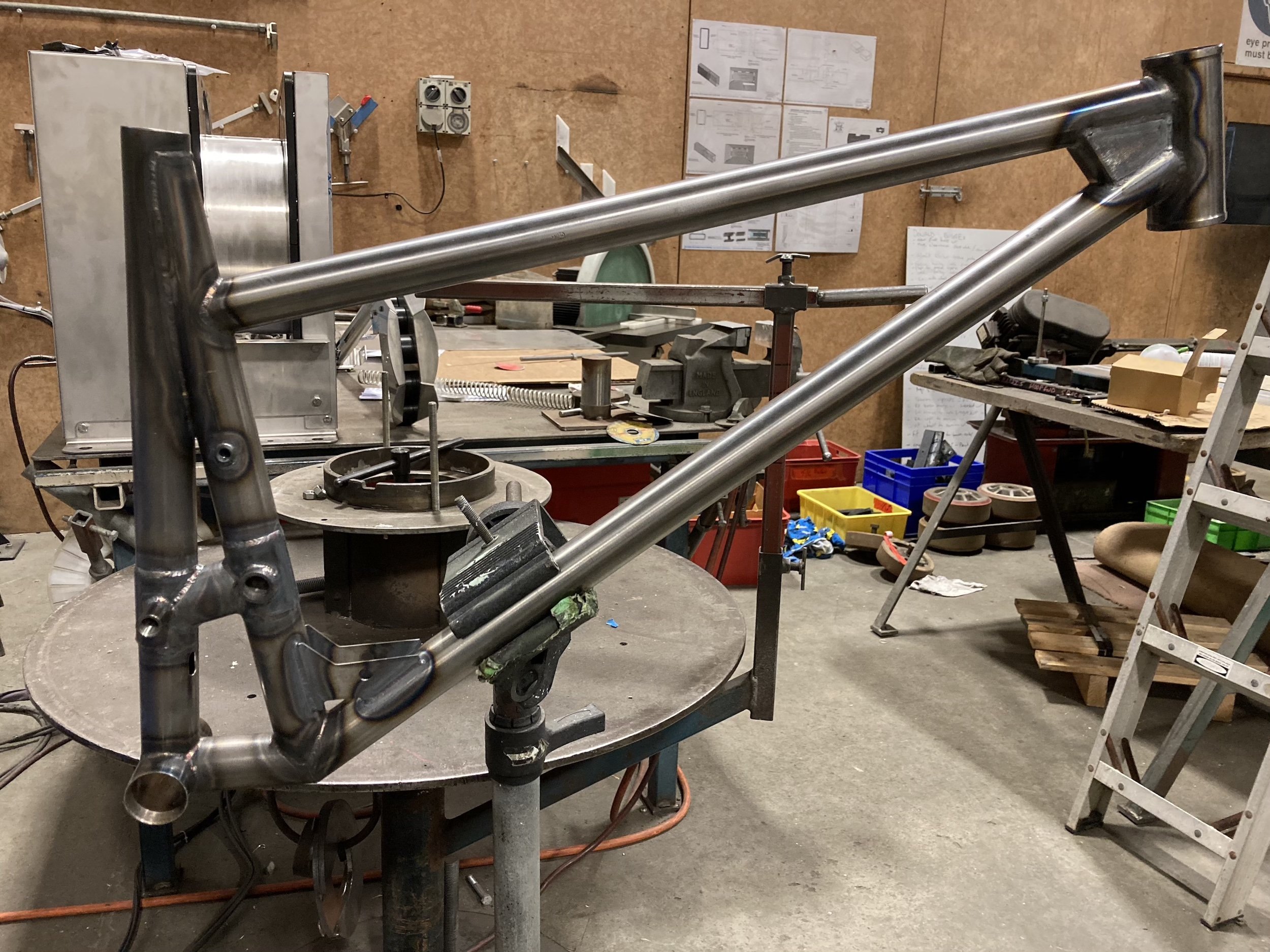
Steel full-suspension bikes are polarising. Everybody knows steel hardtails are superior for trail riding, but some can’t get past the “ladder-chic” of a BTR. For others, nothing makes us retch more than a swoopy carbon or hydroformed frame.
Steel can be limiting for a full-suspension bike. The design must make very efficient use of material, and you often find you’re converging on something you can just… “add to cart”. But that’s the joy: they’re elegantly simple. Designing something outside the mold takes a special type of lateral thinking and creativity.

The suspension is a semi-high single pivot with a linkage-driven shock. The idler is mounted to the chassis and positioned to provide stable and predictable anti-squat. Chassis-mounted idlers are uncommon; most choose to mount this on the swingarm or linkage because it’s easier to package. I find chassis mounted idlers provide better control over the anti-squat curves.
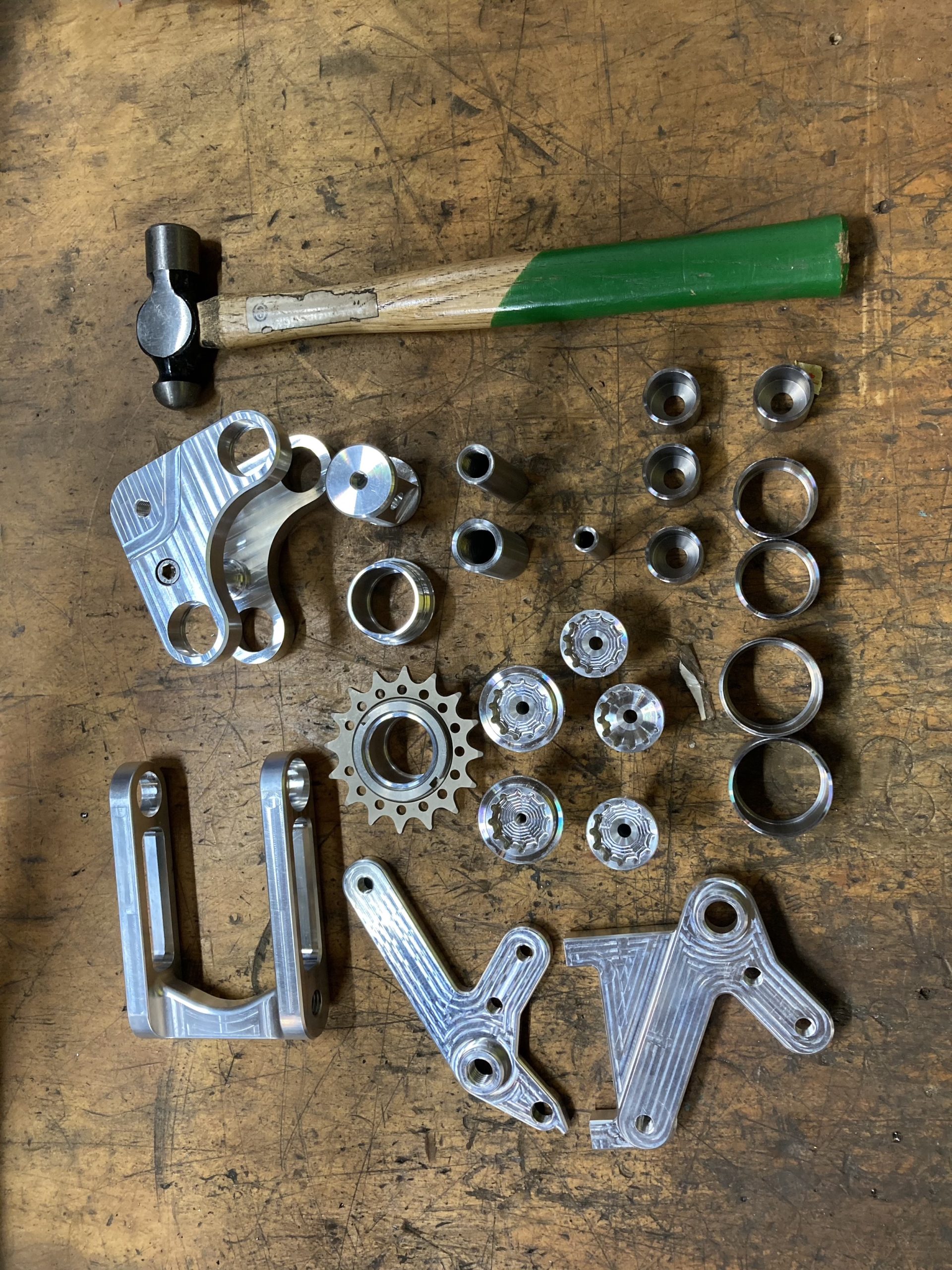
The linkage is primarily to stiffen the connection to the swingarm but also aligns the shock and tunes the leverage curve, providing about 35 per cent progression. The linkage, pivot, idler, and dropout hardware were CNC machined in China from 7075 T6.

It’s hard to write about performance objectively because bias always creeps in. Firstly, it is actually good. This bike has been my only mountain bike for nearly four years. If it wasn’t good, I would have made a new one by now.
Yeah, the shifting is a bit vague, and the BB is a bit low for some situations, but that’s the extent of the issues. As for how it compares to factory bikes, I think most bikes are compromised for marketability, cost, and performance in scenarios I’m not interested in. This has none of those compromises.
For me, this is the best possible bike for the trails I enjoy.